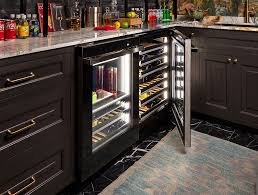
JennAir wine coolers offer independent temperature zones for different wine types. Learn the ideal settings and how to configure them on your unit.
Why Temperature Zones Matter
Different types of wine require different storage and serving temperatures to express their best characteristics. JennAir under-counter and built-in wine coolers feature two or three independent temperature zones, each with its own thermostat and cooling system. Setting these zones correctly preserves your wine collection and ensures each bottle is ready to serve at the optimal temperature.
Recommended Temperature Settings
- Full-bodied red wines (Cabernet Sauvignon, Merlot, Syrah): 60 to 65 degrees Fahrenheit
- Light-bodied red wines (Pinot Noir, Beaujolais): 55 to 60 degrees Fahrenheit
- Full-bodied white wines (Chardonnay, Viognier): 50 to 55 degrees Fahrenheit
- Light-bodied white and rose wines (Sauvignon Blanc, Pinot Grigio): 45 to 50 degrees Fahrenheit
- Sparkling wines and Champagne: 40 to 45 degrees Fahrenheit
- Long-term storage (all types): 55 degrees Fahrenheit — if you are aging wine, a consistent 55 degrees is the universal storage temperature
Configuring Zones on JennAir Wine Coolers
- Locate the temperature control panel. On most JennAir wine coolers, this is a touch panel on the upper front or inside the door frame.
- Select the zone you want to adjust — typically labeled “Upper Zone” and “Lower Zone.”
- Use the up and down arrows or touch controls to set the desired temperature. Each press typically changes the temperature by one degree.
- Wait 24 hours for the zone to stabilize at the new temperature before evaluating.
Best Practices for Zone Assignment
- The upper zone in a JennAir wine cooler is typically warmer than the lower zone — heat rises. Assign red wines to the upper zone and white wines or sparkling to the lower zone for the most energy-efficient operation.
- If you primarily store one type of wine, set both zones to the same temperature for maximum capacity and simplicity.
- Avoid setting any zone below 40 degrees Fahrenheit — wine can develop tartrate crystals or be damaged by near-freezing temperatures.
- Avoid setting any zone above 65 degrees Fahrenheit — elevated temperatures accelerate aging and can spoil wine.
Troubleshooting Temperature Issues
- One zone is warmer than the setpoint — check that the door seals properly and is not opened frequently. Verify that the unit is not positioned next to a heat source (oven, dishwasher, or direct sunlight).
- Zones do not hold independent temperatures — if both zones track each other’s temperature, the zone baffle or damper between the zones may be stuck or damaged. This directs cold air from one zone into the other.
- Temperature fluctuates — minor fluctuation of 2 to 3 degrees is normal during compressor cycles. Fluctuation beyond that may indicate a faulty thermostat or sensor.