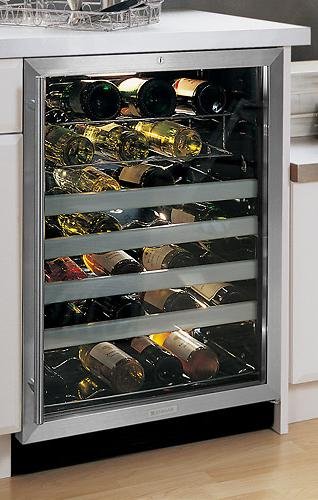
Excessive vibration can disturb wine sediment and shorten its aging potential. Learn how to minimize vibration and noise in your JennAir wine storage unit.
Why Vibration Matters for Wine
Wine stored for aging benefits from minimal disturbance. Vibration agitates sediment, potentially affecting the maturation process and the clarity of the wine when it is eventually decanted. JennAir wine coolers are designed with low-vibration compressors and vibration-dampening features, but installation and environmental factors can introduce unwanted vibration and noise.
Common Sources of Vibration and Noise
1. Uneven Leveling
If the wine cooler is not perfectly level, the compressor and internal components vibrate against the cabinet and countertop. This is the most common — and most easily fixed — cause of excessive noise.
- Place a bubble level on top of the unit.
- Adjust the front leveling legs by turning them clockwise to raise or counterclockwise to lower.
- Check both side-to-side and front-to-back. The unit should be level or tilted very slightly back to help the door close.
- Once level, tighten the lock nuts on the leveling legs (if equipped) to prevent them from shifting.
2. Contact with Surrounding Cabinetry
JennAir under-counter wine coolers are designed for built-in installation, but the unit must not be jammed tightly against surrounding cabinets. Even slight contact transmits compressor vibration to the cabinet structure, amplifying the noise. Ensure there is at least a quarter inch of clearance on each side and at the top, as specified in the installation guide.
3. Items on Top of the Unit
Objects placed on top of a freestanding or under-counter wine cooler — glasses, bottles, decorations — will vibrate and rattle when the compressor cycles. Remove all items from the top surface or place a vibration-dampening mat underneath them.
4. Loose or Vibrating Shelves
Wine racks inside the cooler can vibrate if they are not fully seated in their tracks or if bottles are loose on the shelf. Ensure each rack is pushed fully into its glides. Fill any gaps between bottles with rack inserts or simply organize bottles so they do not rattle against each other.
5. Compressor Noise
A humming or buzzing sound when the compressor runs is normal. However, if the compressor is louder than it was when new:
- Check that the condenser coils are clean — dirty coils force the compressor to work harder and run louder. On most JennAir wine coolers, the condenser is behind the toe-kick grille. Clean it with a brush and vacuum.
- If the compressor produces a knocking, clicking, or grinding sound, the compressor may be failing. This requires professional service.
6. Fan Noise
JennAir wine coolers use internal fans to circulate air evenly within each zone. A fan that produces a ticking, scraping, or squealing sound may have a failing bearing or a blade contacting an obstruction. This is a technician-level repair.
Minimizing Noise in General
- Keep the unit away from walls that face living areas — the compressor exhausts heat and noise from the back
- Install on a solid, level surface — loose subflooring amplifies vibration
- Avoid placing near other vibration sources like washing machines or HVAC equipment