
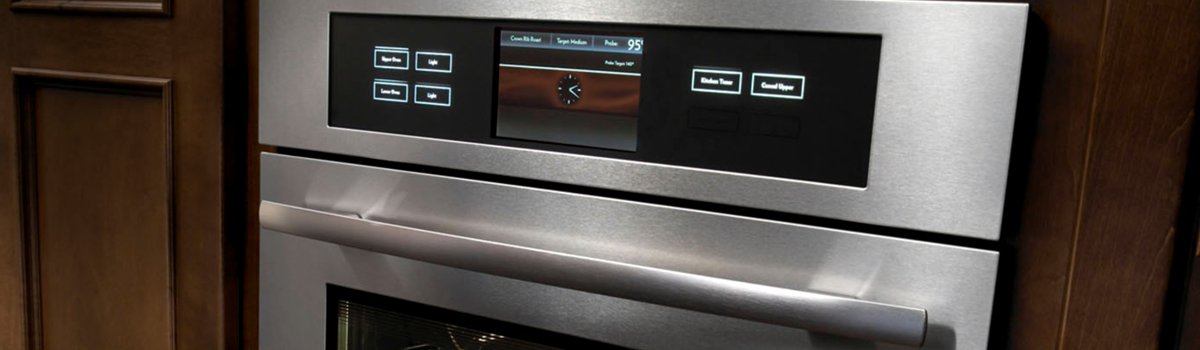
When a JennAir oven throws F9, it’s telling you the door lock system isn’t behaving. Most often this appears during or right after a self-clean cycle, when the oven gets hottest and the lock has to engage and release precisely. If the control board doesn’t “see” the lock switch transition as expected, it flags F9 and may keep the door latched for safety.
What F9 Really Means (Plain English)
Your oven wants the door fully locked before it will self-clean, and fully unlocked for normal cooking. An F9 means the control didn’t get the lock/unlock confirmation it needs. That can be a stuck latch, a weak lock motor, a misreading switch, or even simple heat expansion that kept parts from moving freely. Result: the cycle aborts or the door stays locked until things cool down.
Typical signs you’ll notice
- Self-clean won’t start or stops mid-cycle with F9.
- Door won’t unlock after cool-down, or it unlocks only after a power reset.
- Normal bake/broil is disabled while the code is active.
Why It Happens
High heat, tight tolerances, and moving hardware make the lock assembly a “stress point.” Over time, grease, food debris, or warped shields can drag on the latch. Hinges can shift slightly from heavy doors. A door-lock microswitch can wear or go out of alignment. Less commonly, a harness loosens, a relay on the control board fails, or a power blip during self-clean confuses the lock sequence.
Safe DIY Fixes to Try (Before Calling a Pro)
Unplug the oven or switch off its breaker before removing panels or touching wiring. For gas models, close the gas supply if you’ll be moving the range.
- Let it fully cool
If the code appeared during self-clean, give the cavity plenty of time to drop below the lock-release temperature. Many doors won’t mechanically release while hot. - Cancel and power-reset
Press Cancel/Clear to end any running cycle. Then shut power off for 5–10 minutes at the breaker. Restore power and wait 1–2 minutes to see if the lock completes its cycle and F9 clears. - Check for simple mechanical binding
Open the door (if it’s unlocked) and inspect the latch hook in the door and the receiver slot in the chassis. Remove crumbs/grease with a soft brush and mild cleaner. Look for bent metal, loose trim, or foil that could snag the latch. - Verify door alignment
Close the door gently: it should sit even with the cabinet and seal uniformly. If one corner sticks out, the hinges may be slightly sprung or screws loosened over time. Tighten visible hinge screws. Avoid slamming—misalignment can trigger F9 later. - Gentle reseat of the latch
With power off, lightly move the latch tongue back and forth to confirm free travel (do not force it). If it’s gritty, clean around it; if it feels loose or wobbly, the lock assembly may be failing. - Try a short, low-temp bake
After resets/cleaning, run a 350°F bake for 10–15 minutes. If the oven heats normally and no code returns, the lock likely completed a normal “home” position. If F9 reappears, the switch/motor needs testing.
If the door is stuck locked after cool-down, don’t pry it. Cutting the gasket or forcing the latch can cause expensive collateral damage. Go to pro service at that point.
When You Should Call a Technician
If F9 returns after a proper cool-down and power reset, or the door remains locked, it’s time for diagnostics. A qualified tech will:
- Meter the lock motor and microswitch for proper resistance/operation.
- Inspect the harness and connectors at the lock and control.
- Command a lock/unlock cycle in service mode and check timing/voltages.
- Verify door hinge geometry and gasket compression.
- Rule out a failing control relay/driver before replacing parts.
Catching a weak lock assembly early prevents repeat F9s and protects the control board from overcurrent strain.
Preventive Care (How to Avoid F9)
Keep it simple and consistent—these habits really help:
- Clean around the latch area regularly so crumbs and baked-on grease don’t drag on the mechanism.
- Avoid slamming the door. Heavy doors + impact = hinge shift and latch misalignment.
- Check level and fit after installs or floor moves. A slightly out-of-level range can twist the door frame.
- Self-clean sparingly. The cycle is hard on locks. Use lower-intensity cleaning (steam/hand clean) most of the time; save self-clean for occasional deep cleans.
- Stable power. Try not to start self-clean when storms or outages are likely. A power interruption mid-cycle is a classic F9 trigger.
- Annual inspection. A quick check of hinges, latch play, and gasket condition keeps small issues from becoming lock faults.
Quick Reference (At a Glance)
- Code: F9 (JennAir)
- Meaning: Door lock system fault (latch/motor/switch signal didn’t complete)
- Most common context: During/after Self-Clean
- DIY first steps: Cool down → Cancel → Breaker reset → Clean/inspect latch → Check alignment
- Call a pro if: Door stays locked, code returns after reset, or latch feels loose/gritty
Prefer a zero-guesswork fix? Our factory-certified technicians handle JennAir door-lock issues daily—brand-level diagnostics, OEM parts, and tidy work.