
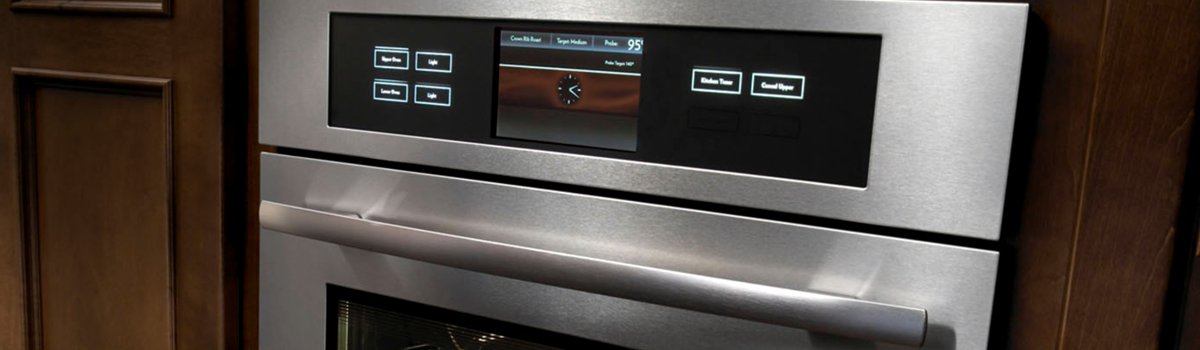
When your JennAir oven flashes F5, cooking plans stall fast. In plain English, F5 is usually a control mismatch: the control board’s hardware doesn’t match its software (or the board can’t validate the configuration it expects). Sometimes a clean reset clears a hiccup; other times the cure is installing the correct control board for your exact model.
Below is an easy-to-read guide that alternates short lists with clear paragraphs, so you can scan, try safe steps, and know when to call a pro.
Quick take: what F5 really means
F5 isn’t a “one sensor failed” message—it’s the control brain saying “what I’m running doesn’t line up with what I’m built for.” That can happen after board replacement, after a power event, or when firmware/config data becomes corrupted. Left unresolved, the oven may refuse to heat, stop mid-cycle, or block certain features (convection, self-clean, etc.).
Common triggers (at a glance):
- Recent control board replacement with wrong part number or build revision
- Firmware/configuration not initialized correctly after service
- Power surge or brownout that scrambled non-volatile settings
- Loose or mis-seated low-voltage harness to the UI/control
Symptoms you might see alongside F5
You may notice one or more of these behaviors:
- The oven powers on but won’t start a bake or preheat stalls
- Beeps at startup, then F5 appears again after a minute
- Certain modes vanish (no convection icon, no broil)
- Touch panel is responsive, but “Start” does nothing or cancels itself
These clues help decide if a simple reset will do, or if you’re facing a control compatibility problem.
DIY: Safe first steps (no parts required)
Start simple and safe. You’re not trying to “force it,” you’re trying to re-sync the control.
- Soft power reset
Turn the oven off. At the breaker, cut power for 5 minutes, then restore. Wait 60–90 seconds and try Bake again. - Hard reset / discharge
If F5 returns, kill power for 10–15 minutes. This lets capacitors discharge and clears transient states. - Check the keypad & harness
With power off, remove the control panel (if accessible in your model) and reseat ribbon cables and multi-pin connectors to the UI/control board. Oxidized or half-seated connectors can mimic “mismatch” errors. - Confirm model identity
Open the door and photograph your model and serial tag. If a control was recently replaced, you’ll need this to verify the exact board part number belongs to your model.
If F5 clears and the oven runs normally through a full preheat, you likely had a transient config error. If it reappears, keep reading.
What the “hardware/software mismatch” really involves
JennAir (under the Whirlpool family) uses model-specific controls: identical-looking boards can ship with different software images or have different hardware IDs. The oven compares its identity (model features, cavity size, sensor set, convection fan, door lock) against what the control reports. If they don’t align, you get F5.
In practical terms, that means:
- A board from a sister model (or an aftermarket substitute) may physically fit but still be wrong.
- Some boards require feature configuration after install (tech mode). If skipped, F5 can persist.
- A surge can corrupt configuration, making a good board look “wrong” until it’s reinitialized.
Guided troubleshooting (when resets don’t hold)
Try the following in order. Stop if you’re uncomfortable removing panels—sheet metal edges are sharp and mains voltage is dangerous.
Text block (read first):
Before replacing anything, rule out wiring and installation mistakes. A partially connected temperature sensor or door-lock harness won’t cause the mismatch, but intermittent feedback can keep the control from completing its checks.
Short checklist to validate basics:
- Breaker is dedicated and fully seated; no shared loads causing brownouts
- Neutral and ground are solid; outlet and junction box connections tight
- Control panel ribbon cable is clean, fully inserted, no kinks or burns
- Cavity sensor connector is secure; visual check for pin push-outs
If a control was recently replaced:
- Match your model number to the control board part number on the invoice or the sticker on the board.
- If the part number doesn’t match the parts list for your model’s full code (including color suffixes/prefixes), that’s your F5.
- Some models require entering a service configuration (dip settings or keypad sequence) after install. If the tech skipped this, F5 may repeat.
Rule of thumb: If F5 survived two proper power resets and connections look good, assume a board/firmware mismatch until proven otherwise.
Fixes that actually resolve F5
Paragraph overview:
There are two real cures: (1) reinitialize/configure the existing control if it supports your model, or (2) install the correct control. End of story. “Trying parts” randomly wastes time and risks new issues.
Short action list:
- Reinitialize/Program: Some controls support a service mode to set model options (single vs. double cavity, convection, probe, etc.). A qualified tech can enter the code sequence, verify stored options, and save.
- Replace with the correct board: If part numbers don’t match your model’s parts list, swap for the exact board revision (and transfer any required jumpers).
- Protect the fix: Add a quality surge protector or whole-home surge protection to prevent repeat corruption.
What not to do (common pitfalls)
- Don’t keep power-cycling the oven mid-heat; you can stress relays and elements.
- Don’t install a “close enough” control from a parts marketplace based only on photos.
- Don’t enter service menus randomly—some options brick features if misapplied.
Preventive habits that cut the risk of F5
Well-cared-for controls fail less. Small habits go a long way.
Paragraph (why it matters):
Control boards live near heat and grease. Stable voltage and clean connections help them survive, and having the right documentation prevents the wrong board from ever going in.
Short preventive list:
- Document your identity: Keep a phone photo of the model/serial tag and a PDF of the parts list for your exact color/trim variant.
- Protect power: Use a quality surge protector or, better, whole-home surge protection. Avoid using long undersized extension cords.
- Vent & cool: Make sure cabinet cutouts and oven cooling vents are not blocked; high heat around the console shortens control life.
- Gentle cleaning: Spray cleaners onto a cloth—never directly at the control panel. Liquids can wick into the UI ribbon and corrode it.
- Post-service check: After any repair, verify the tech programmed the board for your model and that all features (bake, broil, convection, probe, self-clean) appear and work.
Our professional, factory-certified technicians diagnose JennAir controls daily. We verify model identity, install the exact board revision, program features correctly, and test bake, broil, and convection before we leave.