
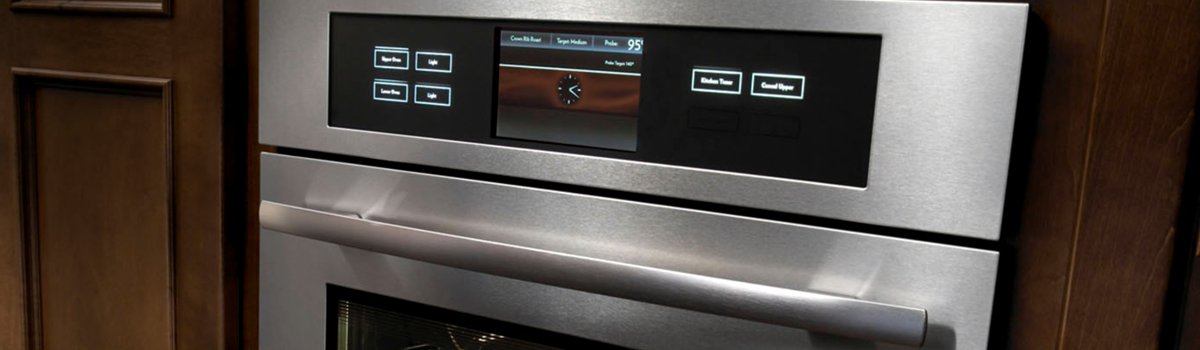
When your JennAir oven throws F3 or F4, it’s the control’s way of saying, “I don’t trust the temperature reading.” In plain English: the oven temperature sensor (RTD) isn’t reporting correctly, usually because the sensor circuit is open (F3) or shorted (F4). Sometimes it’s the sensor itself; other times it’s a loose/oxidized connector or a damaged wire between the sensor and the control board.
What These Codes Mean (Without the Jargon)
The temperature sensor is a small probe mounted inside the oven cavity (typically on the rear wall). As the oven heats, the sensor’s resistance changes; the control board reads that change to regulate heat.
- F3 = “Open” sensor circuit. The control sees infinite/very high resistance (broken wire, unplugged connector, failed sensor).
- F4 = “Shorted” sensor circuit. The control sees near-zero resistance (pinched wire, moisture or carbon tracks in the connector, failed sensor).
Note: Exact code mapping can vary by series. Always match steps to your specific model number when ordering parts or checking specs.
Symptoms You’ll Notice
Bakes that never finish. Preheat that stalls. Overshoot/undershoot temps. Occasional fan/noise with no heat. And of course, F3/F4 on the display that comes back as soon as you try to heat.
The Most Likely Cause
In most homes, the sensor itself is the culprit. After years of heat cycles, the probe can drift or fail. Second place: a loose or corroded harness connector where the sensor plugs into the rear of the cavity or the main harness at the control. Less common, but possible: a damaged wire from a sharp cabinet edge, or a control board input that’s gone bad.
Quick Checks (2–5 Minutes — No Tools)
- Power cycle: Turn the range off at the breaker for 5 minutes, then back on. If the code returns immediately when you command Bake, continue below.
- Look for obvious issues: Open the oven and spot the sensor probe (thin rod, usually top-rear). Make sure it’s securely mounted and not bent into contact with metal racks or walls.
DIY Fix: Sensor & Connector Basics (15–30 Minutes)
Safety first: Turn off power at the breaker before touching anything. Ovens contain live circuits and sharp sheet metal.
- Access the sensor connector
Open the oven door and remove the two screws holding the sensor to the rear wall. Gently pull the probe a few inches forward; you’ll see a small plug. Some models have a short pigtail you can unplug right there; others have enough slack to pull out further. - Inspect and reseat
Unplug and replug the connector several times to clean oxidation. Look for darkened pins, looseness, or any signs of moisture residue. - Replace the sensor if needed
If F3/F4 returns after a reseat, replace the oven temperature sensor (RTD) matched to your model/serial. It’s typically a simple swap: plug in, tuck the wire back, and reinstall the two screws.
Tip: Many oven sensors measure around ~1080 Ω at ~70°F (21°C) on common designs. If you own a multimeter and know how to use it safely, you can check the removed sensor. If your reading is wildly off from spec (always verify your model’s spec), replace it. - Harness check (if code persists)
If a new sensor doesn’t clear F3/F4, inspect the harness from the rear of the unit (pull the range forward, remove the rear cover with power off). Look for pinched, frayed, or heat-damaged wires and reseat the connector at the control board. - Control board consideration
A rare, but real, possibility is a failed control input. If the sensor and wiring check out, the board may need replacement and reprogramming.
Practical Prevention (Keep F3/F4 Away)
- Gentle cleaning around the probe. Avoid soaking the sensor area with liquids or steam cleaners. Moisture can wick into connectors and cause shorts (hello, F4).
- Mind the wiring during deep cleans or moves. When pulling the range for floor cleaning or remodels, don’t yank the harness; sharp cabinetry can nick insulation and lead to intermittent opens (F3).
- Stable ventilation and clearances. Excess heat buildup around the control can accelerate sensor drift and board stress. Keep installation within the spec’d clearances.
- Occasional inspection. Each season, check that the sensor mounting screws are snug and that racks don’t press the probe.
FAQ Quick Hits
Can I keep cooking if the error clears after a reset?
If it was a one-off glitch and temperatures feel normal, you can finish dinner. But if the code returns, stop using Bake until the circuit is checked—running “blind” can overheat the oven or scorch finishes.
Do I need to recalibrate after sensor replacement?
Most units don’t, but some allow user calibration by a few degrees. After a new sensor, run a few test bakes and only calibrate if your model supports it and results are consistently off.
Is F3 always the sensor and F4 always the short?
That mapping is the most common, but JennAir models vary by generation. Always confirm definitions for your exact model number before ordering parts.
F3/F4 = temperature sensor circuit problem. Start with a power reset, reseat the connector, then replace the sensor if needed. If the code persists, the harness or control needs a pro’s eye.