
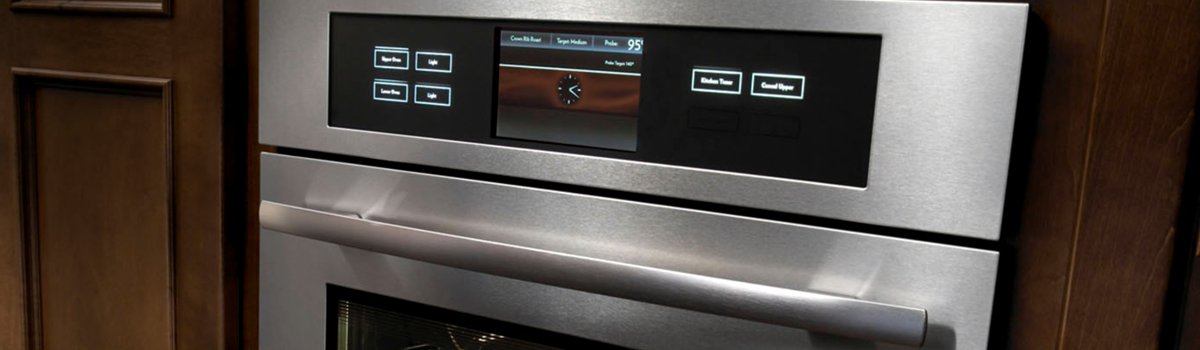
When a JennAir oven or stove throws Error Code F1, it’s usually the appliance telling you the main control board is not behaving correctly. Sometimes the board has genuinely failed; other times it’s confused by electrical noise, a stuck key on the touch panel, or a loose ribbon cable. This guide walks you through clear, safe steps—starting with the easy stuff—so you can decide whether it’s a quick at-home fix or time to replace the control.
What “F1” Actually Means (Plain English)
Think of the control board as the oven’s brain. When it detects abnormal signals it can’t reconcile—like a shorted keypad input, corrupted logic after a power blip, or an internal component out of range—it raises F1 and often disables heating for safety. On many JennAir models, F1 is tightly associated with electronic oven control (EOC) failure; on some, a faulty touchpad/keys can also trigger it. The end result is the same: the oven can’t trust its controls, so it asks you (or a tech) to intervene.
Typical symptoms:
- F1 appears soon after power-up or during preheat
- Beeping that won’t stop until power is cut
- Unresponsive or “ghost-pressing” keys on the control panel
- Random shutdowns or canceled cycles
Quick Checks Before You Grab Tools
Start with the fast, no-risk steps. Many F1 events are caused by “soft” issues you can clear without parts.
- Power reset (5–10 minutes):
Turn the oven off at the breaker for a full 5–10 minutes. This discharges the control and clears transient faults. Restore power and watch the display for a normal boot. - Rule out stuck keys:
Gently press each keypad button one by one. If a key feels mushy, double-clicks, or doesn’t “spring” evenly, that can hold a line “stuck” and provoke F1. - Check for heat soak & blocked vents:
Control boards live near warm air paths. Make sure front louvers/toe kick aren’t blocked by trim, foil, towels, or cleaners, and that the cooling fan (if equipped) exhausts freely.
If F1 comes right back after a clean reset, continue below.
The Failure: Control Board Fault (Why It Happens)
Control boards endure heat, moisture, and voltage spikes. Over time:
- Capacitors and solder joints can drift or crack with thermal cycling.
- Keypad ribbon connectors oxidize or loosen, confusing inputs.
- Power surges/outages corrupt logic or damage delicate components.
While many F1 cases trace to the board itself, remember the touchpad can masquerade as a bad board by sending “stuck” signals. That’s why the next steps separate keypad issues from true board failure.
DIY: Safe, Systematic Fixes (Minimal Tools)
Unplug the unit or switch off the breaker. If you’re not comfortable removing a control panel, stop here and call a pro—sheet-metal edges are sharp and live circuits are dangerous.
1) Reseat and clean the keypad ribbon
Carefully remove the front control panel to access the board. You’ll see a flat ribbon cable from the touchpad into the control.
- Disconnect the ribbon; inspect for corrosion, bent traces, or moisture.
- Wipe the connector edge with a dry, lint-free swab (no liquids).
- Reseat firmly and evenly.
Result:
- If F1 disappears and keys respond normally, you likely had a borderline connection.
- If F1 returns, continue.
2) Visual board inspection
Look for darkened spots, swollen capacitors, or cracked solder at large components and relays. Nothing obvious? That doesn’t rule out an internal failure, but obvious damage is a strong replacement signal.
3) Isolate the keypad (model-dependent)
Some models let you disconnect the keypad and power up.
- If the unit powers without F1 (though keys won’t work), the keypad is suspect.
- If F1 still appears with the keypad disconnected, the control board is almost certainly at fault.
Skip any steps your model’s service literature doesn’t support. If you don’t have access to service info, it’s safer to book a diagnosis.
Preventive Care: Keep F1 From Coming Back
You can’t baby electronics forever, but you can reduce stress on the control system:
- Use a surge protector (or a whole-home surge device). Control boards hate spikes and brownouts.
- Keep panel area dry. Spray cleaner onto the cloth—not the panel—so liquid doesn’t seep toward the ribbon/board.
- Don’t block ventilation. Leave designed gaps around the control; avoid foil or trim that redirects hot air.
- Avoid overheating cycles back-to-back. Give the oven a little cool-down between self-clean or high-temp bakes.
- Stable power feed. JennAir ranges should be on a dedicated, properly grounded circuit. Loose neutrals or shared loads can wreak havoc on electronics.
- Annual checkup. A quick inspection of connectors, fans, and wiring strain can catch issues before they trigger F1.
Quick Reference — F1 at a Glance
- What it means: The control sees invalid/stuck inputs or internal failure.
- First aid: Breaker off 5–10 min → confirm keys aren’t stuck → reseat keypad ribbon.
- Likely fix: Replace/repair control board; inspect/replace keypad if it tests bad.
- Protect the new board: Surge protection, clear vents, keep moisture away from the panel.
When Replacement Is the Answer
If the board fails isolation tests or F1 returns immediately after a reset, plan on replacing the control board (and possibly the touchpad if its behavior has been erratic). Match parts by full model and serial to ensure the correct revision and connectors.
What a pro does that DIY can’t easily cover:
- Reads fault history and sensor inputs in diagnostics
- Meters the keypad matrix for stuck lines
- Verifies stable power, neutral, and ground
- Confirms cooling fan function and venting to protect the new board
If you want a zero-guesswork repair with genuine parts and warranty-safe handling, our factory-certified techs can help the same day in many areas.