
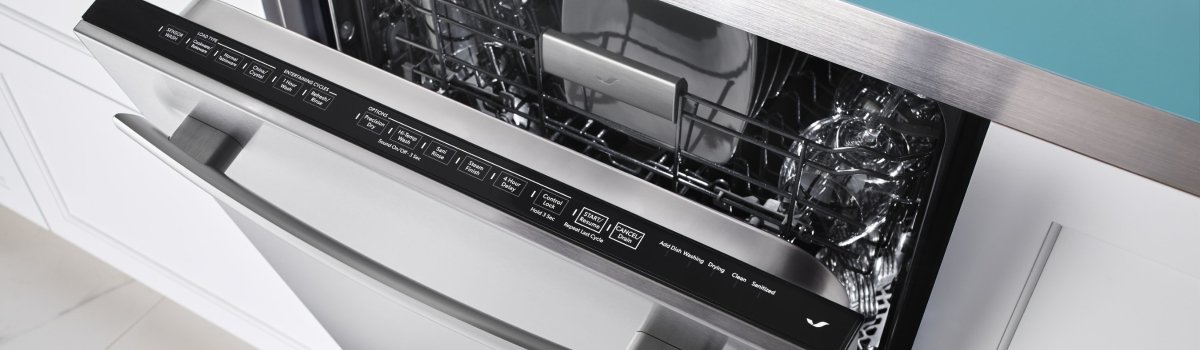
When your Jenn-Air dishwasher flashes F1, it’s telling you the water isn’t heating the way the control expects. Hot water is critical for dissolving detergent, breaking down grease, and sanitizing the load. If the heater can’t reach or hold temperature, you’ll see cloudy film, gritty residue, or a cycle that seems to run forever—then the control throws F1 and calls it quits.
What the F1 fault actually means
In plain English: the dishwasher is waiting for the water to “get hot enough, fast enough.” It tracks time and temperature through a sensor (thermistor). If the temperature barely climbs—or stalls altogether—the control assumes a water-heating fault. That can be a weak or failed heater, a stuck or open high-limit/thermal cutoff, a wiring/connector issue, a sensor reading out of range, or even incoming water that’s too cold to begin with.
You’ll often notice cooler tub walls after the main wash, detergent lingering in the cup, or dishes that come out wet because the machine can’t heat for proper drying.
Most common causes
- Heating element failure (open circuit or high resistance)
- High-limit thermostat / thermal cutoff tripped and not resetting
- Thermistor (temperature sensor) drift causing bad readings
- Loose, scorched, or corroded connectors in the heater circuit
- Control board relay not sending power to the heater
- Incoming water below ~120°F (49°C), which slows the heat ramp and can trigger F1 on some cycles
Quick safety check before you start
Dishwashers use high voltage and retain water. Turn off the breaker and close the water supply before any hands-on work. If you smell burnt insulation, see melted plastic, or find standing water under the unit, stop and book a professional right away.
DIY steps to try first (simple, no special tools)
Start with the “low-risk, high-return” basics. These fix a surprising number of F1 cases without touching a wire.
Prime the hot line. Run the kitchen sink hot for 30–60 seconds before starting a cycle so the machine fills with truly hot water. Re-run a Normal/Auto cycle and check for F1.
Use a high-heat cycle and fresh detergent. Select options like “High Temp Wash” or “Sani Rinse.” Old or damp detergent underperforms and can mask heating issues.
Reset the control. Power the unit off at the breaker for 5 minutes. Restore power and try again; note whether F1 returns at the same time in the cycle.
Clean the filters and spray arms. Restricted circulation makes it harder to transfer heat, which can extend heat-up time and provoke F1.
If F1 disappears after these steps, you likely had a borderline heat-up that improved with hotter supply water and better circulation. If it returns, move to basic inspections.
Basic inspections you can do carefully
You won’t need to fully uninstall the dishwasher for these, but keep the breaker off.
- Look under the door and toe-kick area for signs of moisture, mineral crust on connectors, or heat discoloration around the wiring harness. Any browning on terminals near the heater is a red flag.
- Check the float area and sump for debris. A stuck float or restricted sump reduces water volume and flow, which slows heating.
- Confirm the hot water setting at your water heater (target 120–125°F / 49–52°C at the kitchen tap). Very long runs from the heater may need pipe insulation to keep fill temps up.
If everything looks clean and dry but F1 persists, the heating circuit likely needs testing.
What a pro will test (and when to call one)
A technician will meter the heating element for continuity and proper resistance, verify the high-limit thermostat/thermal cutoff, read the thermistor values against spec at room and warm temperatures, and test whether the control board is sending power to the heater during the heat phase. They’ll also inspect and replace any heat-stressed terminals; a loose spade connector can arc, overheat, and intermittently trip F1 long before the element itself fails.
Practical fixes you can handle (if you’re handy)
Keep it conservative—if in doubt, stop here and schedule service.
- Reseat reachable connectors in the lower access area (breaker off). If a terminal feels loose, that’s a sign it needs proper repair or replacement.
- Descale the machine with a dishwasher cleaner; heavy lime scale on the element can reduce heat transfer and slow the ramp to temperature.
- Improve supply temperature by bumping the home water heater to ~120–125°F (stay within local codes and safety guidance).
If F1 returns after these steps, the heater, sensor, limit, or control needs diagnosis and likely parts replacement.
Smart habits to prevent F1 in the future
A few simple routines keep the heater circuit happy and your wash quality high.
- Hot start every time. Run the sink hot before pressing Start so the first fill isn’t ice-cold.
- Use rinse aid and high-heat options for better drying and consistent sensor readings.
- Clean filters monthly and keep spray arms clear to maintain strong circulation and even heating.
- Descale quarterly if you have hard water; scale insulates the element and confuses temperature rise timing.
- Check the toe-kick area twice a year for dust, spills, or early signs of heat discoloration on wiring.
- Avoid frequent short-cycle “quick washes” with heavy soil; they can push borderline heating performance over the edge.
Short action plan
- Try the hot-sink prime → high-heat cycle → control reset sequence.
- Clean filters and spray arms; verify 120–125°F water at the tap.
- If F1 returns, schedule a diagnostic for the heater circuit (element, limit, sensor, control) and have any discolored connectors replaced.
Prefer a zero-guesswork fix? Our factory-certified technicians service Jenn-Air every day—brand-level diagnostics, OEM parts, and (where routes allow) same-day appointments.