
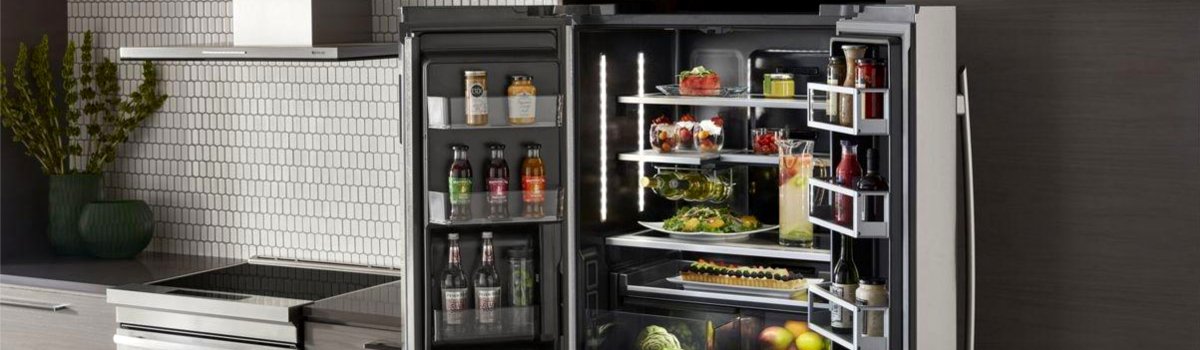
When a Jenn-Air refrigerator throws Error Code RS, it’s telling you the refrigerator-compartment temperature sensor (thermistor) is reading out of range—or not being “seen” correctly by the control. In plain English: the board doesn’t trust the fridge-side temperature data, so cooling can behave oddly (long run times, warm spots, short cycling, or erratic temps).
What RS Actually Means (in human terms)
Inside the fresh-food section there’s a small NTC thermistor (temperature sensor). It constantly reports temperature to the control board, which decides when to run the compressor, fans, and damper. If the sensor is failed, unplugged, shorted, iced over, or blocked by food packaging, the readings go bad and you get RS.
You might notice:
- Food near the sensor area getting too cold or too warm
- Fan/compressor running more than usual
- “Hunting” temps that never stabilize
Why It Happens (primary causes)
- Failed thermistor (age, moisture ingress, or factory defect)
- Loose/bad connector or damaged wiring in the door hinge or harness run
- Sensor physically buried behind items or iced over by humidity buildup
- Control board misread (less common, but possible after power events)
Quick note: Jenn-Air models vary. Always cross-check your exact model’s tech sheet (often tucked behind the toe-kick or rear panel) for specs and part numbers.
First Things First — Safe, Simple Checks (no tools)
Start with easy wins before you grab a screwdriver.
- Power reset
Unplug (or switch the breaker off) for 5–10 minutes, then restore power. Transient logic faults often clear. - Airflow & loading
Make sure vents aren’t blocked by containers, produce bags, pizza boxes, etc. Give the sensor area open air—crowding forces false readings. - Gasket & doors
Inspect door seals for gaps and debris. Warm, humid air leaking in can frost the sensor and throw RS. - Visual ice check
If you see frost/ice where the sensor sits or along the rear panel, let it fully defrost (doors open, towels down) before retesting.
If RS returns after these basics, move to light DIY diagnostics.
DIY Diagnostics (light tools, careful steps)
Read through once before starting. If any step feels beyond comfort, skip to the pro option at the bottom.
A. Find the sensor
On most Jenn-Air units (Jenn-Air is under the Whirlpool family), the fresh-food thermistor sits behind a small grille or in a channel along the back/side wall. You’ll usually access it from inside the fridge.
B. Reseat the connector
With power off, gently unplug the sensor’s connector and plug it back in. Look for oxidized pins, broken insulation, or a loose fit.
C. “Ice-water sanity test” (optional if you have a multimeter)
Many Whirlpool-family thermistors change resistance predictably with temperature. If you’re handy:
- Remove the sensor (note its routing).
- Submerge the tip in ice water (~32°F/0°C) for 5 minutes.
- Measure resistance at the leads and compare to your model’s tech sheet values. (Don’t guess—check the sheet for your sensor spec.)
- A sensor that reads wildly off-spec (or jumps around when you barely move the wires) is bad.
D. Harness check
Follow the wire run. At door hinges or tight bends, look for pinched, cracked, or stretched wires. Any damage here can mimic a bad sensor.
If the sensor fails the test—or reseating doesn’t stop RS—replace the thermistor with the correct part for your model.
Repair Options (from simplest to most effective)
- Replace the refrigerator thermistor (RS sensor)
This is the most common fix. Match by model and serial so the connector and spec are correct. Route the new sensor exactly like the old one; sloppy routing can catch frost or fan airflow. - Repair harness / connector
If you found a broken wire or burnt pin, repair/replace the affected section. Use proper connectors—no loose twists or electrical tape that can wick moisture. - Control board diagnosis
If a known-good sensor still triggers RS, the control may not be interpreting the signal correctly. That’s a professional test/repair.
If you’d rather skip the multimeter and parts hunt, our factory-certified techs handle Jenn-Air daily—brand-level diagnostics, OEM parts, and clean routing so readings stay precise.
When to Stop DIY and Call a Pro
- RS returns immediately after reset and sensor reseat
- Temps won’t stabilize (soft produce freezing, dairy warm)
- Visible wiring damage or intermittent readings when the door moves
- You don’t have access to the model’s resistance table/tech sheet
A technician will:
- Pull the tech sheet data and meter the thermistor at the board (eliminates harness guesswork)
- Check damper operation and evaporator fan behavior (bad airflow can ice sensors)
- Verify control input vs. cabinet temp and rule out board faults
Keep RS Away — Preventive Care That Actually Works
Keep air moving (text)
Leave a little space around the back wall and the sensor area. Avoid stacking soft bags and produce right against vents or sensors.
Simple habits (short list)
- Wipe door gaskets weekly; replace if torn or hardened
- Cool leftovers before loading (steam = sensor ice = flaky readings)
- Vacuum the condenser and toe-kick area every 6–12 months
- Avoid over-stuffing shelves; use bins so air can circulate
Moisture management (text)
High humidity is the enemy of accurate sensing. If you see recurring frost near the sensor, review door-opening habits and gasket seal. A quick bead test (slip of paper between gasket and frame) can reveal weak spots.