
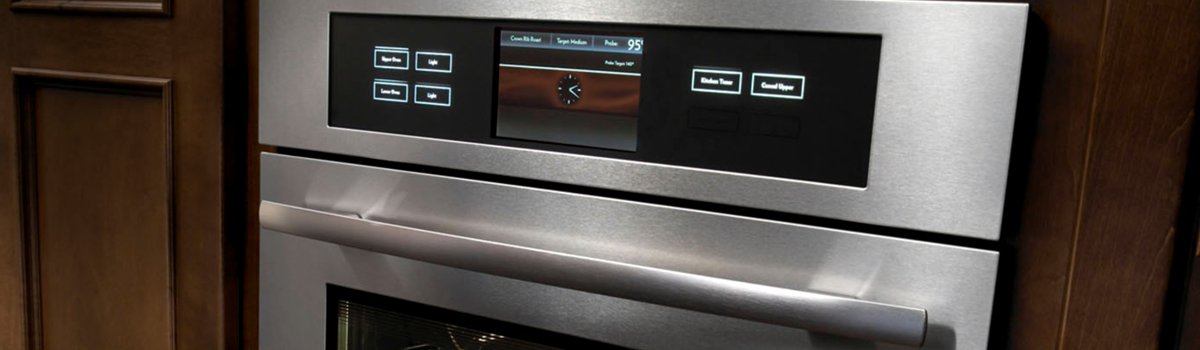
When your Jenn-Air flashes FS, the appliance is telling you it has detected unsafe, excessively high temperatures. In plain English: something in the temperature-control chain isn’t behaving, and the oven is protecting itself (and your kitchen). Sometimes this is a quick win—like a stuck relay after a power surge. Other times it points to a failing sensor or control board that needs a professional.
Below is a clear, practical guide written for everyday owners. We’ll explain what FS is, the most likely causes, safe DIY checks, and the maintenance habits that keep the code from coming back.
What FS Usually Means
FS is an overheat/temperature regulation fault. Your oven’s control expects temperatures to rise and stabilize within a safe curve. If it sees runaway heat, or a reading that says “I’m way hotter than I should be,” it trips the fault to prevent damage.
You might notice one or more of these symptoms before or during FS:
- Preheat races past the setpoint or smells hotter than normal
- Fan runs hard, then the display beeps and throws FS
- The oven won’t start a bake cycle and immediately faults
Common Causes (in order of likelihood)
Think of the heat “system” as four key players: sensor (NTC/probe) → wiring/harness → relay/element(s) → control board. When one goes sideways, the control can misread or lose control of temperature and throw FS.
- Temperature sensor (probe) out of spec or shorted: If resistance is too low, the control “thinks” the cavity is blazing hot.
- Stuck heating relay or shorted element: Heat keeps pouring in even after the setpoint, causing real over-temp.
- Harness/connector issues: Loose, corroded, or heat-damaged plugs create false readings.
- Control board fault: Rare, but a damaged triac/relay driver can overfire an element.
Quick Safety Note
Overheat faults aren’t the time to “let it ride.” If you smell burning insulation, see smoke, or the oven keeps heating with the control “off,” cut power at the breaker immediately and do not restore power until inspected.
Step-by-Step: Smart DIY Checks (No Special Tools)
Start with the easy wins. These steps are safe for most homeowners and often resolve transient FS faults.
Power reset (full, not just the keypad)
Turn the oven off at the breaker for 5–10 minutes. This clears a stuck logic state. After restoring power, run a short preheat to 350°F and monitor. If FS returns quickly, move on.
Door and cooling airflow
Open and close the door firmly—an improperly latched door can trap heat improperly or confuse cooling airflow. Make sure nothing blocks the cooling vents around the control panel.
Empty the oven
Remove foil liners, broiler pans, or stoneware sitting against the sensor or elements. Foil against walls or the floor can reflect heat and cause hot spots that trip FS.
If FS disappears after these basics, you likely had a transient overheat or airflow restriction. If it persists, continue with targeted checks.
Targeted Checks You Can Do (Basic Tools Helpful)
These involve a little more care; unplug power or shut off the breaker first.
- Inspect the temperature sensor
Locate the slim metal probe on the rear interior wall. Confirm it’s not bent, coated with heavy residue, or loose at its mount. Wipe it clean with a soft, damp cloth (cool oven only), let it dry, and try a preheat again. - Look at the bake/broil elements
With good lighting, check for blisters, cracks, or burn spots. A shorted element can overheat fast. If you see visible damage, the element needs replacement before further testing. - Check connectors you can access
If your model has a removable back panel, look (don’t tug) at the sensor harness and element connectors for browning or melted plastic. Any visible heat damage is a stop sign—call a pro.
If you own a multimeter and are comfortable using it safely, the sensor should read roughly 1080–1120 Ω at ~70°F (21°C) on many models. A dramatically low reading (or near-short) points to a bad probe.
Practical Fixes (What Usually Solves FS)
Most FS cases end with one of these repairs:
- Replace the temperature sensor (probe) if resistance is wrong or readings drift
- Replace a shorted/damaged element (bake/broil) that overheats the cavity
- Repair a heat-stressed harness or connector to the sensor/element
- Replace or repair the control board if a relay or driver is stuck
If you’re not fully comfortable working with mains power, let a pro do it. It’s faster, safer, and protects the appliance.
How to Prevent FS from Coming Back
A few simple habits dramatically reduce overheat faults and keep bake temps accurate.
- Keep the sensor clean and unobstructed
Avoid foil on walls/floor and keep large pans from touching the probe. - Use self-clean sparingly
Self-clean runs extremely hot and can stress sensors, elements, and boards. Wipe spills promptly and use a warm, soapy cloth for routine cleaning instead. - Mind ventilation
Don’t block the cooling vents. If you remodeled, verify the cut-out follows the installation clearances so hot air can escape. - Check door seal and hinges
A crushed gasket or loose hinge leaks heat, making the oven overwork and overshoot. - Avoid running empty on high broil
High broil without food can create intense radiant heat that spikes temperatures near the sensor. - Annual checkup
A quick preventive inspection—sensor mount tight, connectors snug, elements intact—catches issues before they become FS.
Prefer a fast, warranty-safe repair? Our factory-certified technicians handle Jenn-Air daily, use OEM parts, and can often come the same day when routes allow.