
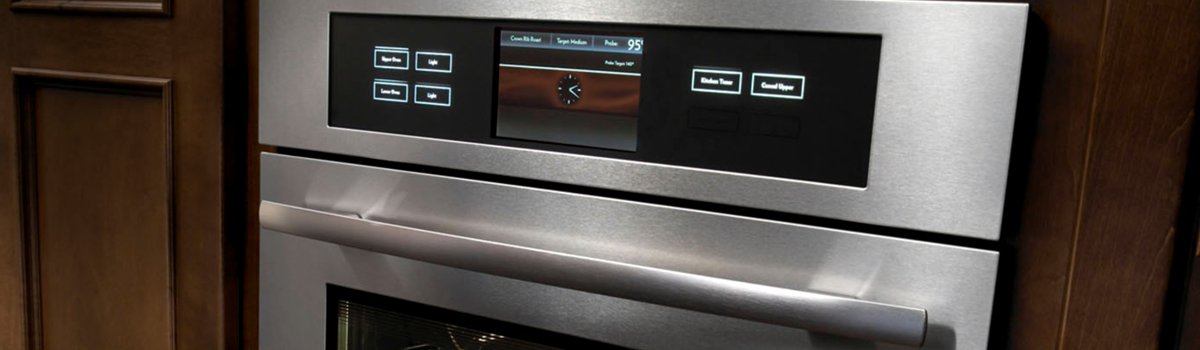
When a Jenn-Air oven flashes FQ and the control panel won’t respond, the appliance is telling you the user interface (touchpad/control panel) isn’t communicating properly with the main control. Sometimes it’s a simple lock or power glitch; other times the keypad, ribbon cable, or control board is at fault. The guide below walks you through safe, practical steps—written for everyday owners—not just techs.
What “FQ” Usually Means (Plain English)
FQ points to a communications or keypad fault. The oven’s brain (the control board) isn’t getting clean “button pressed” signals from the front panel, so it ignores input to avoid unsafe operation.
You’ll often notice: unresponsive buttons, beeps with no action, settings that won’t change, or a display frozen on an error.
Why the Control Panel Stops Responding
Most FQ cases trace back to one of a few patterns: a control lock accidentally enabled, power quality issues during a brownout or after self-clean, moisture or grease sneaking behind the touch panel, or a failing UI board/ribbon that’s oxidized or cracked. Self-clean cycles and high ambient heat can accelerate these problems, especially on older control membranes.
Quick Checks Before You Dive In
- Make sure the oven has stable power (no tripped breaker, no shared high-load circuit that’s sagging voltage).
- If the model has a Control Lock/Child Lock, disable it per the manual (often holding a specific key for 3–5 seconds).
- Note exactly when FQ appears—at startup, after heat, or randomly—since timing helps diagnosis.
DIY Fixes You Can Try (In Order)
Start with the simplest steps and stop if anything feels unsafe. Always cut power at the breaker before touching panels or connectors.
Soft Reset
Turn the breaker OFF for 5–10 minutes, then back ON. This drains residual charge and clears minor logic glitches. After power returns, wait 60 seconds and test a basic bake cycle.
Control/Child Lock Off
Many Jenn-Air models use a lock function that makes the panel appear dead. Look for a padlock icon on the display or try pressing and holding Start, Cancel, or Control Lock (model-dependent) for several seconds to toggle it.
Dry Out Hidden Moisture
If the kitchen was just cleaned or there was heavy steam (boiling, self-clean), moisture can film the keypad. With power OFF, open the oven door and let the panel area dry thoroughly. You can aim a room fan toward the console for 30–60 minutes. Avoid heat guns or hairdryers on hot settings—excess heat can damage plastics and adhesives.
Keypad Reality Check
Restore power and try several different keys. If one row/column of buttons never responds while others do, that points to a ribbon/trace issue in the keypad matrix.
Breaker Reset + Cords/Connections (Non-Invasive)
If your unit is cord-connected and accessible, verify the plug is fully seated and not warm to the touch (sign of a poor connection). For hardwired units, leave wiring to a pro.
Advanced (Experienced DIYers Only)
Power OFF at the breaker. If you’re comfortable removing the rear console cover (sheet-metal screws), you can: Inspect the UI ribbon cable for kinks, corrosion, or partial pull-out. Reseat once (disconnect/reconnect) with clean, dry hands. Look for browned or swollen components on the control board. Any sign of heat damage is a stop sign—call a technician.
If anything looks uncertain, reassemble and schedule service. Don’t probe energized circuits without training.
If FQ returns immediately after a clean reset—or the panel stays dead—the UI/touchpad or main control board (ERC) likely needs repair or replacement.
What This Fault Is (and Isn’t)
FQ is about interface/communication, not a baking element or thermostat directly. A perfectly good bake element won’t heat if the control never “sees” your keypress. That’s why chasing elements or temperature sensors before the panel is responsive wastes time.
When to Call a Professional
- The panel remains unresponsive after a reset and lock check.
- Keys respond inconsistently (entire rows/columns dead).
- FQ reappears as soon as the oven warms up (heat-sensitive electronics).
- You see signs of board damage, arcing, or melted connectors.
A trained tech will run keypad matrix tests, check low-voltage supplies, verify ribbon integrity, and determine whether the UI or main control is the culprit. They’ll also ensure grounds and neutral are solid—flaky grounding can mimic keypad faults.
Prevent It Next Time: Practical Habits
Good habits dramatically cut the odds of another FQ.
- Skip self-clean before big events. High-heat self-clean stresses controls. If you must use it, let the oven cool fully and verify normal operation well ahead of a holiday cook.
- Keep moisture off the console. Spray cleaner on the cloth, not directly on the panel. Wipe gently—no soaking edges.
- Mind ventilation. Make sure trim, cabinetry, and rear clearances meet spec so heat can escape the console area.
- Stable power. If your home sees brownouts, consider a surge protector rated for appliances (talk to your electrician about code-safe solutions).
- Light, regular cleaning. Grease and sugar residues can creep into panel seams over time; a quick weekly wipe beats a heavy soak.
FAQ-Style Quick Answers
Can I use the oven while FQ is showing?
No. If the panel isn’t reliably taking input, the oven may ignore stop commands or fail to regulate heat. Fix the interface first.
Will FQ clear itself?
Sometimes, after a full power reset and dry-out. If it returns, the fault is persistent—don’t keep power-cycling endlessly.
Which part usually fails?
It’s split between the touchpad/UI (membrane or capacitive panel) and the main control. Heat, moisture, and age determine which goes first; testing is required.
What about cost?
UI assemblies and controls vary by model and availability. A pro diagnosis prevents buying the wrong board—these parts are often non-returnable once installed.
If you’d rather skip the guesswork, our factory-certified range specialists handle Jenn-Air FQ faults daily: brand-level diagnostics, OEM parts, and careful heat-management checks so the fix sticks.