
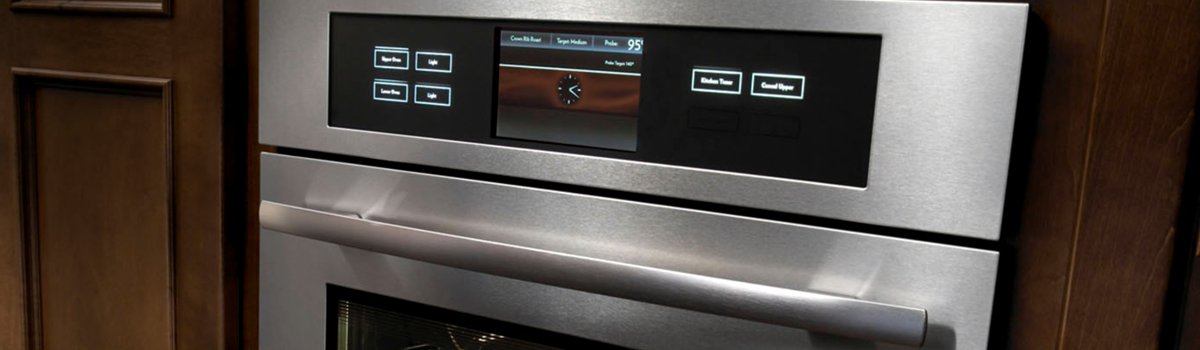
When a Jenn-Air oven or stove throws Error Code FM, it’s flagging unstable temperature control. In plain terms, the cavity isn’t holding a steady setpoint. That instability is most often tied to a drifting temperature sensor (NTC/probe), an aging control board/relay, or simple issues like door-seal leaks and blocked airflow inside the oven. The good news: you can run a few safe checks at home before calling for service.
What this fault really means
Modern ovens watch temperature constantly and make tiny corrections to keep bakes even. With FM, the controller sees swings outside its comfort zone—overshooting or undershooting and hunting. You might notice long preheats, sudden drops during a bake, or food that’s underdone in the center but dark on top. If you’ve recently cleaned, moved, or heavily loaded the oven, the issue can appear more pronounced.
Common symptoms (at a glance)
- Noticeably longer preheat or never reaching setpoint
- Uneven results: pale bottoms, overbrowned tops, dry edges
- Code returns right after a reset or mid-cycle
- Fan runs oddly or cycling sounds feel inconsistent
Likely causes
A few culprits account for most FM cases:
- Temperature sensor (NTC) drift or loose connection causing bad readings
- Control board or heat relay not switching elements consistently under load
- Door gasket leaks letting heat escape and cool air in
- Blocked airflow (foil on racks, oversized sheets, or pans hugging the back wall)
- Power quality issues (weak circuit, shared high-draw appliances on the same line)
Safe DIY steps to try first
Unplug the range or switch off the breaker before touching anything inside the cavity or behind panels. Work cool and carefully.
Power reset (5–10 minutes). Restore power and run a preheat test to 350°F. Watch how quickly temps climb and whether FM reappears.
Check the door seal. Close a strip of paper in several spots around the door; if it pulls out easily, the gasket may be leaking. Clean the gasket with mild soap and water; replace if torn or flattened.
Remove airflow blockers. Avoid lining racks with foil. Keep pans at least an inch from the back wall so the convection flow isn’t choked.
Quick thermometer check. Place a reliable oven thermometer center-rack, preheat to 350°F, and note the stabilized reading after 10–15 minutes. Normal swing is ~±15–25°F; wild swings suggest sensor/relay trouble.
Sensor lead & connector (visual). With power OFF and the oven cool, locate the temp sensor probe at the back wall inside the cavity. Make sure its screws are snug and the probe isn’t loose. If you can access the rear panel safely, verify the sensor harness connector is fully seated (no bent pins or corrosion).
Remove heavy moisture. After steam or high-humidity cooking/cleaning, run a short 10–15 minute 300–325°F dry-out to clear residual moisture from the cavity and components.
User calibration (if available). Many models allow a small offset (e.g., ±30°F). If your checks show a consistent bias (always ~20°F low), apply a conservative calibration per your manual. If swings are erratic, don’t calibrate—erratic = component issue.
If FM returns immediately after these steps—or the oven can’t hold temperature during a simple 350°F bake—plan on a professional diagnosis.
When to call a pro (and why it matters)
- FM returns after a clean power reset and empty-cavity preheat
- The oven overshoots/undershoots by 30°F+ or cancels cycles
- You see damaged wiring, arcing marks, or smell hot electronics
- Convection or cooling fan won’t run at speed
A technician can meter the sensor and harness under load, verify relay output, evaluate the fan circuit, and—if necessary—replace the control with the correct revision. That saves your elements (and dinner) from a control that’s guessing.
Fixes you’ll typically see
Short version: replace the temperature sensor if it’s out of spec or intermittent; replace or repair the door gasket if it fails the paper test; service or replace the control if relays misbehave; restore proper fan function if airflow is weak. Good shops will also check for software updates or calibration options specific to your model.
Keep FM from coming back: practical prevention
Give the oven an easy life and it will pay you back with steady temps.
- Calibrate after a big repair or move. If your model allows user calibration, adjust only within the manual’s range.
- Protect airflow. Skip foil on the floor of the oven and don’t block the convection cover with oversized pans.
- Mind the door. Avoid leaning on it or resting heavy sheets when hot; replace a tired gasket—cheap insurance for tight temps.
- Clean smart. After steam or heavy cleanups, let igniters/fans and the sensor area dry fully before the next high-temp bake.
- Stable power. If your home sees big voltage swings, consider a dedicated circuit evaluation—controls don’t love brownouts.
- Annual checkup. A quick pro inspection catches lazy fans, cracked harnesses near hot zones, and relays that are about to chatter.
Fast action plan (bookmark this)
- Breaker OFF → 5-minute reset → empty-cavity 350°F test
- Paper test the door gasket → remove airflow blockers
- Reseat/inspect the temperature sensor connector
- If FM returns, schedule service for sensor/relay/fan diagnostics
Prefer to skip the trial-and-error? Our factory-certified range techs handle Jenn-Air daily—brand-level diagnostics, genuine parts, and careful calibration.