
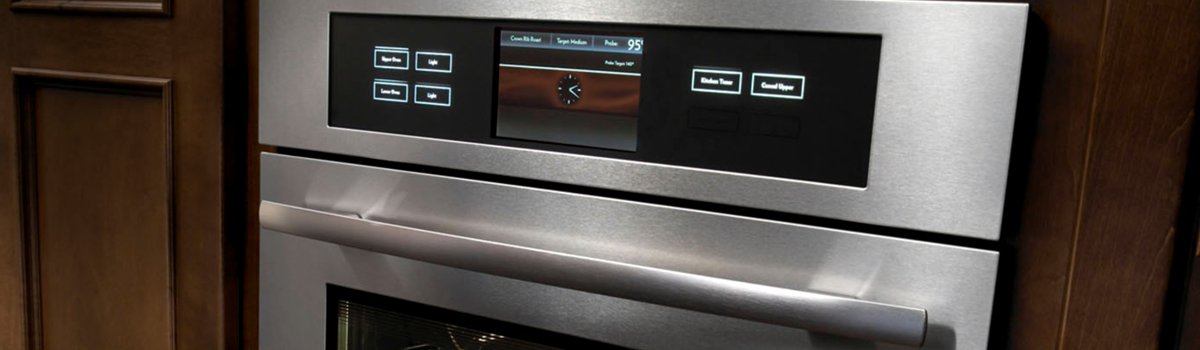
When a Jenn-Air oven or range flashes FI, it’s not a cooking failure—it’s usually an oven light fault. In plain English: the appliance thinks the cavity light isn’t behaving (burned-out bulb, loose connection, stuck door-switch, or a control signal issue). Left alone, FI can keep the light from turning on, make it flicker, or—in some cases—interrupt a bake if the control is continuously retrying the circuit.
A quick read on symptoms
You might see one or more of these:
- FI on the display, sometimes right after startup or when you open/close the door
- Oven light won’t turn on, or it flickers and then dies
- Light button on the control panel does nothing (or only works intermittently)
What “FI” usually means on Jenn-Air
The control is monitoring the light circuit: the high-temp bulb, its socket, the door switch, and the wiring harness back to the electronic control. If the control senses an open circuit (burned bulb, loose plug) or a short (failed bulb filament, moisture in the socket), it raises FI. Less commonly, a stuck door switch or a failing relay on the control can trigger the same alert.
Common causes, from most to least likely
- Burned-out appliance-rated oven bulb (standard bulbs can’t handle the heat)
- Corrosion or heat damage in the lamp socket or at the spade connectors
- Misaligned or failing door switch that tells the board the door never opened/closed
- Pinched or loose wiring harness after a deep clean or a recent install
- Rare: control board output fault or stuck “Light” keypad/contact
First steps before you grab a screwdriver
Unplug the range (or flip the breaker) and let the cavity cool. Safety first—oven bulbs and lenses get hot, and you don’t want live voltage at the socket.
Now try a soft reset: restore power after 5 minutes. If FI returns immediately when you press the light button or open the door, move on to the checks below.
DIY checks you can handle in minutes
Start simple and move deeper only if needed.
Confirm the bulb type
Remove the lens and bulb. Inspect the filament and glass for dark spots. Replace with an appliance-rated, high-temperature oven bulb (match wattage and base type from your manual). Standard household bulbs won’t last and can trigger FI again.
Clean and reseat the socket
With power off, look inside the socket for oxidation. Light surface corrosion can be cleaned with a dry cotton swab; if it’s heavily pitted or burned, the socket should be replaced. Reseat the bulb firmly but never overtighten.
Check the door switch behavior
Restore power. Open and close the door while watching the display and listening for the click of the door switch. If the light never responds—or the switch feels mushy—the switch may be out of alignment or failing. Many switches mount with two screws; slight adjustment can restore proper contact.
Look for moisture after deep cleaning
If you recently steam-cleaned or sprayed cleaner near the lens, let the socket dry fully. Trapped moisture can create a temporary short that trips FI. A cool hair-dryer blown gently at the lens area (power off) helps evaporate moisture.
Harness wiggle test (gentle!)
With power off again, access the rear panel if it’s safe for your model. Inspect the two light-circuit leads from the control to the lamp assembly. If a push-on connector feels loose, reseat it until it’s snug.
If FI clears after replacing the bulb or reseating the socket and switch, you’re done. If it returns immediately—or the light still won’t respond—keep reading.
Deeper fixes (when basic steps don’t stick)
You’re likely looking at one of two things:
- Failed lamp socket / melted insulator—replace the socket assembly
- Control output or keypad fault—the relay that feeds the lamp, or the “Light” button circuit, isn’t behaving
These are still fixable at home if you’re comfortable with part numbers and safe disassembly, but most owners prefer a pro at this point to avoid damaging the control panel or wiring.
When to call a technician
- FI returns the moment you power on, even with a new, correct oven bulb
- The door switch tests fine, but the light circuit reads open/short on a meter
- The control panel “Light” button is non-responsive or triggers other keys
- You notice heat-browned connectors, brittle insulation, or a cracked lens ring
A Jenn-Air-trained tech will ohm-test the bulb and socket, verify continuity through the door switch, and scope the control output under load to decide between a socket/harness swap and a control replacement.
Prevention that actually works
Keep it boring and your FI will stay away.
- Use only oven-rated bulbs. Match wattage and base exactly; cheap bulbs cook quickly and fail early.
- Keep cleaners off the lens and socket. Spray on a cloth first; avoid soaking the lens ring.
- Tighten as you go. After replacing a bulb, check the lens ring is snug so steam can’t creep in.
- Mind heat and moisture after self-clean or roast sessions. Let the cavity cool with the door closed so condensation doesn’t collect at the socket.
- Annual checkup. A quick inspection of the lens, socket, and door switch takes minutes and can prevent nuisance FI mid-bake.
Short action plan
- Replace the bulb with a correct, oven-rated lamp
- Clean/reseat the socket, verify the door switch clicks and reports
- If FI returns: inspect harness & connectors, then consider socket or control replacement
Prefer to skip trial-and-error? Our factory-certified range specialists handle Jenn-Air every day—brand-level diagnostics and OEM parts to keep things reliable.