
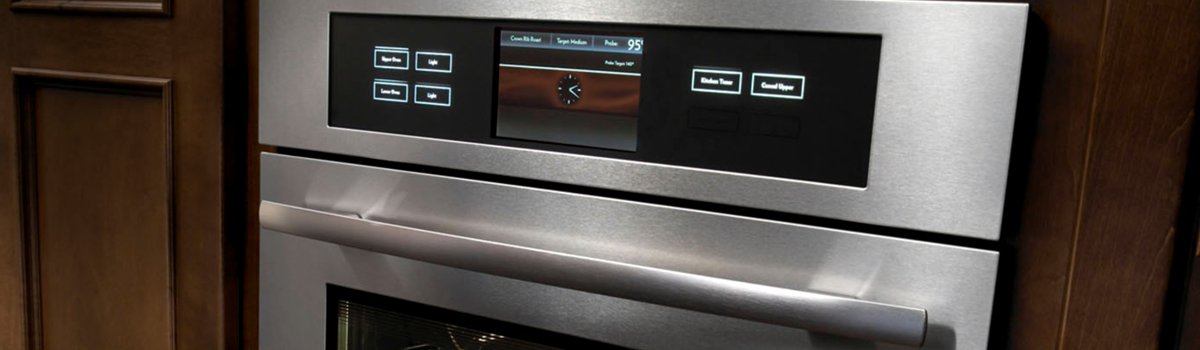
When a Jenn-Air oven or stove throws Error Code FH, it’s usually pointing to a Keytail Connection Error—a communication problem between the user interface (touchpad) and the main control board (ERC). In plain English, the “keyboard tail” (the flat ribbon cable that carries button presses) isn’t talking cleanly to the control. Sometimes it’s a loose plug, sometimes oxidation on the contacts, and sometimes a failing touch membrane or control board. The good news: a calm, step-by-step approach often gets you back to preheating without replacing half the machine.
What “FH” Really Means on Jenn-Air
Inside the control panel is a flexible “keytail” ribbon that plugs into the board. When the control board can’t read the keypad matrix properly—open circuit, noisy signal, or stuck/ghosted keys—it flags FH. You might see unresponsive buttons, random beeps, or the oven refusing to start a cycle even though the display lights up.
Typical symptoms you might notice
- Buttons don’t respond, or the wrong function triggers.
- The oven won’t start a bake or broil cycle, or it cancels itself.
- FH appears after cleaning the panel or after a steamy cook (moisture can creep into the keypad).
The Root Cause: Keytail (Ribbon) Communication Fault
Most FH events trace back to one of a handful of weak links, all centered on that UI-to-board connection:
- Loose or partially seated ribbon cable at the UI or ERC.
- Oxidized/contaminated contacts from time, moisture, or cleaning spray.
- Cracked or kinked ribbon from repeated panel lifting or stress.
- Failing touch membrane (wear in the keypad layers) that creates intermittent key signals.
- Control board input failure, less common but possible, especially after surges.
Quick Checks Before You Grab Tools
Start simple and safe. Power off the range at the breaker for 5–10 minutes, then restore power. Many transient keypad faults clear after a full reset. If FH returns immediately—or buttons still misbehave—move on to a careful inspection.
Safety first: Always cut power at the breaker before opening any panel.
DIY Fixes (Step-By-Step)
Read through before you begin so the sequence feels natural.
- Kill power and access the control panel
Open the oven door to reach the trim screws (location varies). Remove the back or top panel as required for your model. Support the control panel so you don’t tug the cables. - Document the connections
Take a clear phone photo of the control board and ribbon placement. You’ll thank yourself during reassembly. - Reseat the keytail ribbon
Gently release the lock tab on the connector (if present) and pull the ribbon straight out. Inspect for kinks or corrosion lines. Reinsert fully and evenly, then relock. Repeat on the UI side if accessible. - Clean the contacts
If the ribbon has exposed contacts, lightly clean with 99% isopropyl alcohol and a lint-free swab; let dry completely. Do not scrape or sand—these traces are delicate. If the connector shows verdigris or heavy contamination, that’s a sign the part may need replacement. - Check cable integrity
Flex the ribbon gently while watching for cracks at the bend points. Any visible damage usually means replacement is the right move. - Reassemble and test
Restore power. Try basic functions—Bake, Broil, Warm—and a few keypad combinations. If FH is gone and the keys respond consistently, you likely solved it.
If FH returns or certain buttons still ghost, the keypad membrane may be failing internally or the board’s keypad input circuit is weak. At that point, replacement of the UI/touchpad assembly or the main control board is the durable fix.
When to Call a Pro
- FH reappears after reseating/cleaning the ribbon.
- Multiple keys read incorrectly (e.g., pressing “Bake” registers “Timer”).
- You see corrosion, heat-discolored connectors, or cracked traces.
- There’s a history of power surges, breaker trips, or lightning hits.
A technician can run keypad matrix tests, check line-voltage stability, and confirm whether the failure sits in the UI or the ERC—saving you from throwing parts at the problem.
Smart Prevention That Actually Works
Keep this simple and consistent—these habits extend the life of the control panel:
- Keep liquids and steam away from the panel. Don’t spray cleaner directly onto the touchpad; apply to a cloth first. Wipe gently around the edges where the ribbon enters the assembly.
- Avoid harsh chemicals. Ammonia and abrasive cleaners can migrate into seams and degrade membranes.
- Mind heat and ventilation. Long, high-heat self-clean cycles and trapped steam can stress the keypad. Ventilate the kitchen and follow the manual’s self-clean limits.
- Surge protection. A quality surge suppressor (or whole-home protection) helps protect control electronics that read the keypad.
- Gentle handling. If you remove the panel for any reason, support it so the ribbon isn’t bent sharply. Re-seat connectors squarely—no twisting or forcing.
Quick Reference: What to Try First (Without Overdoing Lists)
Start with a breaker reset → inspect and reseat the ribbon → clean contacts with isopropyl → test buttons. If FH persists, plan on a UI membrane or control board replacement based on diagnosis.
Final Word
Error FH looks intimidating, but it’s often a straightforward connectivity issue. A clean reseat and contact refresh fix many units; when they don’t, a targeted part swap gets you back to precise preheats and reliable baking.