
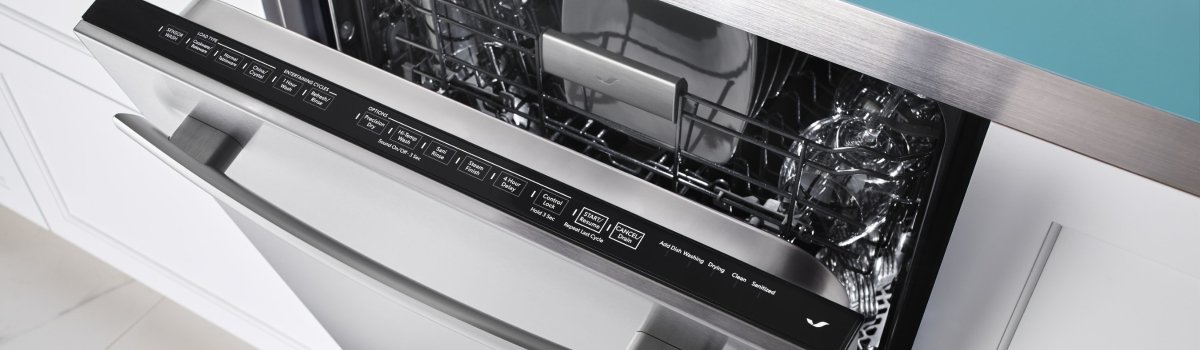
When a Jenn-Air dishwasher throws Error Code FS, it’s flagging a problem with the salt dispenser—the component that feeds dishwasher salt into the built-in water softener. If salt doesn’t dose or regenerate properly, minerals stay in the wash water. The result? Cloudy glasses, white film on dishes, and an error that keeps coming back.
What FS Actually Means
In plain English: the dishwasher thinks the softener didn’t regenerate. That usually happens when salt can’t move from the reservoir into the softener (caked salt, blocked passages, or a misread from the float/sensor). Until that’s sorted, hard water makes detergents less effective and leaves residue behind.
You’ll often notice one or two of these before the code appears:
- Spotty, chalky residue on glass and stainless items
- Rough-feeling glassware or plastic, even after a long/hot cycle
- Rinse aid seems to “do nothing,” and FS returns after resets
Why It Happens (Most Common Causes)
Keep this short list in mind while you troubleshoot:
- Wrong salt or no salt in the reservoir (use dishwasher salt, not table or rock salt)
- Caked or wet-clumped salt blocking the feed path
- Damaged or dirty cap/O-ring allowing water intrusion or poor sealing
- Incorrect water-hardness setting, so the machine never doses/regenerates correctly
- Blocked brine channel or stuck float/sensor in the salt well
- Less common: faulty dispenser valve or sensor wiring
DIY Fixes That Actually Help
Unplug or switch the breaker off before working around water and wiring. Have a towel and a small funnel ready.
- Confirm you really need salt
Make sure your model has a softener and that your local water is hard enough to require dishwasher salt. If you recently moved or changed water sources, hardness may be different. - Open and inspect the salt reservoir
Remove the cap. If you see slushy, caked, or bridge-formed salt, break it up gently with a plastic spoon. Don’t use metal tools. - Clean the cap and O-ring
Rinse away crystals. Check the gasket for nicks or flattening. A bad seal lets water creep in and cake the salt. - Flush and re-prime
If the well is a paste, scoop out the worst of it. Add a cup of warm water to dissolve residue so the brine pathway can flow again. Let it sit a minute, then top off with proper dishwasher salt through a funnel. - Set the water hardness correctly
Enter the settings menu (varies by model) and match the hardness to your local supply. If you don’t know it, most municipal sites list grains per gallon (gpg). A wrong setting can trigger FS even when salt is present. - Re-seal and test
Tighten the cap, wipe away spills, restore power, and run a short hot cycle. If the FS code clears and dishes stop spotting, you likely solved the dosing problem.
If FS returns immediately: repeat steps 2–4 and look closely for a stuck float in the salt well or evidence of a blocked brine path. Persistent FS after a clean re-prime suggests a sensor/valve fault that needs a technician.
Smart Habits to Prevent FS in the Future
You don’t need a complicated routine—just a few good habits.
- Use real dishwasher salt. It’s made to dissolve into a clean brine; table salt can cake and contain anti-caking agents that misbehave.
- Refill before it’s bone-dry. Topping up when the indicator shows low keeps air pockets and salt bridges from forming.
- Keep the cap clean and sealed. Rinse crystals off the threads, inspect the O-ring, and hand-tighten firmly after each refill.
- Match the hardness setting to your water. If your city changes treatment or you install a whole-home softener, update the setting.
- Load for airflow and drainage. Avoid nest-stacking bowls and blocking spray arms—good hydraulics help rinse mineral residue even in moderately hard water.
- Occasional maintenance cycle. A hot “sanitize” or manufacturer-recommended maintenance cycle helps clear hidden buildup.
If you’d rather skip the guesswork, a factory-trained tech can clear the FS fault, verify dosing and sensors, and make sure your dishwasher’s softener is regenerating like new.