
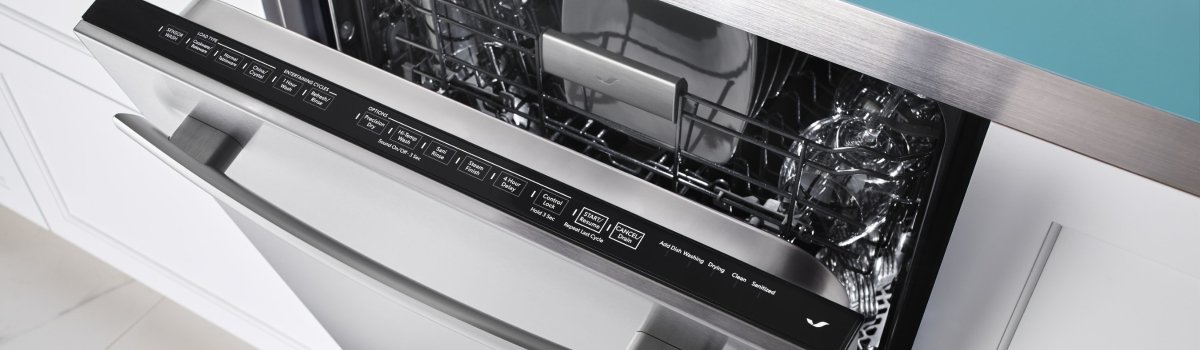
When your Jenn-Air dishwasher throws Error Code FP, it’s calling out a fan error—the drying fan isn’t spinning or isn’t being driven the way the control expects. Because modern dishwashers rely on directed airflow to pull moist air out and move warm, dry air across the dishes, a stalled fan can leave you with damp loads, foggy glassware, and a code that keeps coming back after every cycle.
What “FP” Looks Like in Real Life
Most owners first notice that dishes are still wet long after the cycle ends. You might also hear silence where a gentle fan hum used to be near the end of the cycle, or you’ll see FP on the display with the cycle refusing to continue. Sometimes you’ll catch a faint musty odor after a few missed dry cycles—trapped moisture lingers when the fan can’t move air.
So… what exactly failed?
In plain English, the drying fan is the small motorized blower that exchanges humid air for drier air during the final phase. Error FP means the control isn’t seeing the fan’s expected behavior (current draw, speed, or feedback), often because:
- The fan motor has worn bearings or seized after years of heat and humidity.
- The vent path is obstructed by a kinked hose, lint, or mineral residue, so the fan can’t move air.
- A loose connector or damaged wire keeps power from reaching the fan.
- Less commonly, the control board isn’t energizing the fan even though it should.
Quick, Safe Things to Try First
Start simple and avoid taking the machine apart unless you’re comfortable.
- Power reset
Turn the dishwasher off at the breaker for 5 minutes, then restore power. This clears temporary logic faults and can wake up a sticky relay. - Load and settings sanity-check
Make sure tall items on the top rack aren’t blocking the vent outlet. Run the next cycle with Heated Dry on and rinse aid filled to at least half. If your model has “ProDry,” “Extended Dry,” or similar, enable it for this test. - Listen for the fan
Near the end of the cycle—or immediately after you start a short “Dry” or “Rinse-Only + Heated Dry” sequence—listen at the door edge or vent for a soft fan whir. Silence plus a returning FP code points to a stalled motor or no power to it.
If FP returns after a reset with the right settings, move to light maintenance steps you can do without full disassembly.
DIY Steps You Can Do Without Going Too Deep
Keep safety first: if you remove any panels, kill power at the breaker.
Clean the vent outlet and interior screens
Open the door and locate the vent outlet (usually along the upper left/right of the inner door on many models). Wipe away lint, paper label fragments, or mineral film. A soft brush and warm water work well.
Clear the filter system
A badly clogged sump/filter raises internal humidity and makes drying difficult even with a good fan. Remove and rinse the filter assembly; re-seat it snugly so the pump isn’t cavitating.
Check for door liner condensation
After a heated dry attempt, crack the door for 30–60 seconds. If steam pours out but dishes are still wet, the fan isn’t exchanging air—a strong nudge to inspect/replace the fan module.
Inspect accessible wiring (if comfortable)
With power off and the toe-kick panel removed, look for the fan harness connector if it’s reachable on your model. Reseat any loose plug you can clearly identify; don’t tug on wires.
If you don’t hear the fan on any cycle, or FP reappears immediately, it’s time for a targeted repair.
Practical Fixes (If You’re Handy)
- Replace a failed fan module with the correct part number for your exact model/serial.
- If a connector shows heat discoloration, install the proper high-temp terminal and ensure strain relief.
- Renew any vent seals that have collapsed, which can recirculate steam.
If you’re unsure about part compatibility or safe wiring practices, let a pro handle it—dishwashers pack water, heat, and electricity into a tight space.
Smart Habits That Prevent FP From Returning
You don’t need to baby the machine—just keep airflow and humidity in check.
- Use rinse aid consistently; it lowers surface tension so water sheds and the fan doesn’t have to fight heavy droplets.
- Load with an airway: don’t block the top-rack vent area with cutting boards or sheet pans. Angle concave items (bowls, mugs) so water can drain.
- Pick the right cycle: heavier loads or plastics benefit from Heated Dry + Extended Dry.
- Keep filters clean: a 30-second rinse after every few cycles keeps humidity down.
- Treat hard water: if you get chalky film, run a monthly cleaner or use a softener—mineral buildup can choke the vent path and the fan.
- Mind kitchen climate: very cold kitchens condense steam on the door; crack the door for a minute after the chime to let moisture escape.
Need this tailored to your specific model so the part numbers and vent location match 1:1? Share the full model and serial, and I’ll refine the steps for your exact Jenn-Air configuration.