
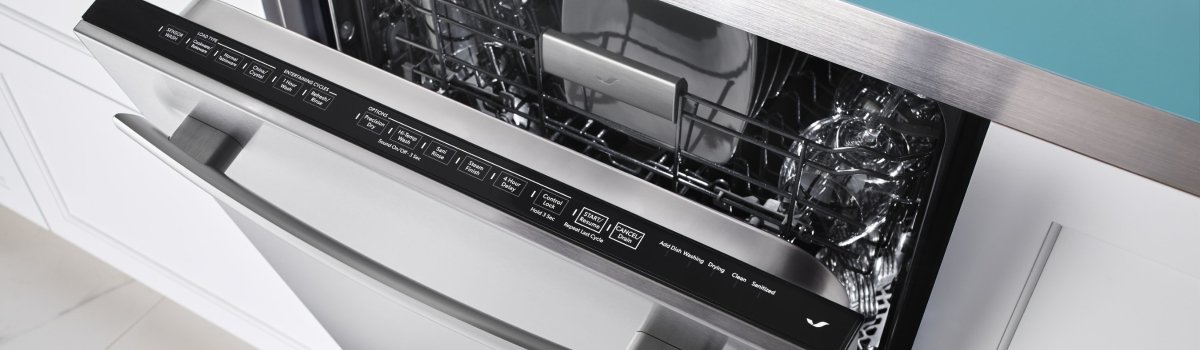
When your Jenn-Air dishwasher flashes Error Code FL, it’s flagging a problem with the rinse aid dispenser. Because rinse aid lowers surface tension so water sheets off dishes, a dispenser fault shows up as poor drying, stubborn water spots, and filmy glassware—even when the wash cycle seems fine. The code is your control board saying, “I tried to trigger the dispenser, but the signal or function isn’t right.”
What this fault actually means
In plain English: the dishwasher expected the rinse aid system to be ready and respond (electrically and mechanically). With FL, it detects that the dispenser didn’t open or didn’t report correctly. On many Jenn-Air/Whirlpool-family models, the dispenser is a single “detergent + rinse aid” assembly with an internal actuator (often a wax motor or small solenoid), a level sensor, a cap and gasket, and a tiny dose channel. If any of those parts fail—or if the control can’t talk to them—the machine throws FL and drying takes a hit.
You’ll usually notice one or more symptoms:
- Clean but wet dishes after Heated Dry.
- Water spots or a milky film on glasses.
- Rinse Aid Low indicator behaving oddly (always on, always off, or flickering).
- The FL code returns after a reset, especially near the end of the cycle.
Why it happens (root causes)
Most FL cases come down to four buckets:
- Empty or misread rinse aid
The reservoir is empty, the level float/sensor is stuck, or the cap magnet/tab isn’t being “seen.” The control thinks there’s no dose available and flags FL. - Stuck or weak dispenser actuator
A tired wax motor/solenoid can’t pop the internal door at the right time. Heat cycles and detergent residue can make the mechanism sluggish. - Cap or gasket issues
A cracked cap, swollen O-ring, or detergent crust around the fill neck lets air in or blocks the dose channel. Result: no (or tiny) dispense. - Wiring/control communication
Loose connectors, moisture at the dispenser plug, or a damaged harness between the door and main control can look like a “no-response” event to the board.
Quick wins before you grab tools
Start simple and practical. These take just a few minutes and fix a surprising number of cases.
- Power reset: Turn the breaker off for 5 minutes, then back on. This clears transient faults.
- Use the right cycle: Pick a cycle with Heated Dry (and “Extended Dry” if available). Rinse aid can’t mask a no-heat dry.
- Refill properly: Open the rinse aid cap, fill to the MAX line, then click the cap fully closed. If the cap doesn’t seat squarely, the dispenser won’t dose right.
DIY steps (easy, careful, effective)
Unplug the dishwasher or switch off the breaker before opening the door panel or touching wiring.
- Inspect and clean the fill area
Open the cap. With a flashlight, look for gelled detergent or crust in the neck. Wipe it out with a damp cloth. Spin the cap’s O-ring gently—if it’s nicked, flattened, or swollen, replace the cap/gasket. Refill with liquid rinse aid only (not detergent). - Free the level float / clear the dosing channel
Most dispensers have a tiny internal float or optical window. Tap the door near the dispenser with two fingers to help free a sticky float. Run a hot cycle to dissolve residue. If your model has a rinse aid setting (1–6), set it to 3 or 4 for normal water, 5–6 for hard water. - Check the dispenser connector
With power off, remove the inner door panel (screws around the perimeter). You’ll see the dispenser on the inside of the outer door. Reseat the 2-wire or multi-wire plug firmly; look for corrosion or moisture. If you see moisture, dry it gently and leave the door open for an hour before reassembly. - Run a test cycle and observe
Restore power, choose a normal cycle with Heated Dry. Listen near the end of the cycle—many models actuate the dispenser late in the wash. If the FL code does not reappear and drying improves, you likely had a residue or seating issue.
If FL returns after these steps—or you noticed a brittle connector or burnt smell—move on to professional service (the actuator or entire dispenser assembly may need replacement).
What you can replace yourself (if you’re comfortable)
- Rinse aid cap & O-ring: Cheap, fast, and often the culprit behind under-dispensing and misreads.
- Complete dispenser assembly: On many Jenn-Air models, the detergent/rinse aid unit swaps out with a few screws and a harness plug. Match by model number to get the correct part and foam gasket. If you’re unsure about door disassembly or wire routing, book a tech.
When to call a pro right away
- FL keeps returning immediately after a breaker reset and refill.
- You find melted plastic, heat staining, or a cracked dispenser body.
- The harness at the hinge looks chafed or pinched.
- Heated Dry is selected but you also see no heat (could be a separate heater/thermistor fault that compounds drying issues).
A technician will meter the actuator, confirm dose timing from the main control, check the level sensor signal, and inspect the door harness where it flexes each time you open/close.
Preventive habits that actually work
Keep it light on lists—just the essentials you’ll remember.
- Always keep rinse aid topped up. Don’t wait for spotty glasses; keep it near MAX and set the dispenser level to match your water hardness.
- Use the right detergent. Quality pods or powder + rinse aid. Avoid “rinse-aid-in” short-cuts—they’re inconsistent across cycles.
- Monthly hot clean. Run a hot maintenance cycle (with a dishwasher cleaner) to dissolve film around the dispenser and vent.
- Mind the cap. After each refill, wipe the neck and seat the cap until it clicks; replace the cap/gasket if it feels loose or weeps.
- Vent space. Don’t block the vent outlet with tall items on the upper rack; drying needs airflow plus rinse aid to work.
FAQ quick answers (so you don’t scroll again)
Will my dishes dry without rinse aid?
Sometimes—but expect more spotting and wet plastics. Rinse aid is designed to make Heated Dry effective.
How long until I see improvement after refilling?
Usually one full cycle. If you adjusted the dispenser level, give it two.
Is FL dangerous to ignore?
Not dangerous, but it wastes energy (longer dry times), leaves residue, and can mask other dry-system issues. Fix it soon.
Prefer a hands-off fix? Our factory-certified techs handle Jenn-Air daily—brand-level diagnostics, correct parts, and careful door reassembly.