
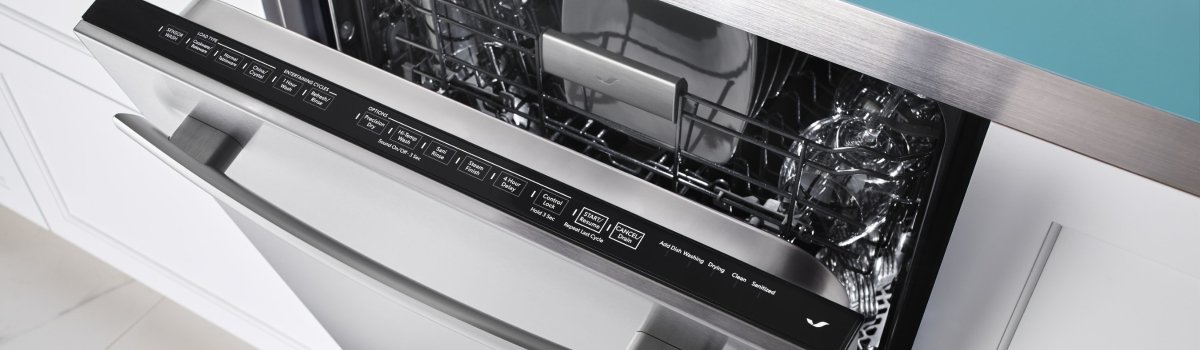
When a Jenn-Air dishwasher throws Error Code FF, it’s warning about an overflow condition—either water is rising where it shouldn’t, or the machine thinks it is because a level/float sensor is stuck or misreading. The goal is simple: protect your kitchen from leaks and protect the control board from water damage. If you act methodically, you can often clear the code and get back to spotless dishes without calling for service.
What “Overflow” Really Means (in plain English)
Dishwashers manage water with a fill valve, a circulation pump, a drain system, and a float/level sensor that tells the control when to stop filling. FF appears when the control detects water beyond the safe threshold or a sensor state that signals “too full.” Sometimes this is a real overflow (blocked drain, foaming from the wrong detergent, stuck fill valve). Other times it’s a false alarm caused by a stuck float, debris on a sensor, or water sitting in the base tray after a small leak.
You might notice the unit pausing mid-cycle, running the drain pump repeatedly, or refusing to start while FF sits on the display. That’s the safety logic doing its job.
Likely Causes (from most common to less common)
- Stuck or waterlogged float / misreading level sensor
- Clogged filter or drain path causing water to back up
- Over-sudsing from too much detergent or non-dishwasher soap
- Slow or stuck fill valve that doesn’t close cleanly
- Small leak pooling in the base (loose hose clamp, door gasket wear)
- Kinked, elevated, or improperly installed drain hose that traps water
First Aid: A Safe Reset That Doesn’t Skip the Basics
Start with a calm, careful reset rather than cycling buttons randomly.
- Cut power at the breaker for 5 minutes.
- Open the door and pull the lower rack. Remove the filter assembly and rinse it under warm water.
- Shine a light in the sump area: scoop out food debris, fruit pits, glass, or labels that could block the drain inlet.
- Gently lift and drop the float (or tap the float dome)—it should move freely with a faint click. If it sticks, clean around it with a soft brush and warm, soapy water.
- Restore power and run a short rinse. If FF clears and the machine completes the rinse, monitor the next full cycle.
If FF returns immediately, continue below.
Hands-On Fixes You Can Try (No special tools)
Check the drain path
A dishwasher that can’t evacuate water can “overflow” internally. Pull the toe-kick if needed and verify the drain hose isn’t kinked. Make sure the hose runs upward to a high loop under the counter or to an air gap, then down to the disposal/sink tailpiece. Remove the hose at the disposal and check for a knockout plug (on new disposals) or hard grease buildup. Reattach securely.
Clear suds the right way
If you smell fragrance and see foam, you’ve got over-sudsing. Add a tablespoon of cooking oil into the tub and run Rinse to collapse the foam, then run Drain/Cancel. Switch to a high-quality dishwasher detergent and turn on rinse-aid per label directions.
Inspect the inlet (fill) valve area
With power off, look for slow seeping at the valve or a loose clamp on the fill hose. Any dampness suggests the valve isn’t closing fully—FF can trigger if the water level creeps up between cycles.
Look for water in the base tray
Many models have a leak-tray/float underneath. If a small leak tripped the tray float, the control will keep draining and throw FF. Unplug, remove the toe-kick, and check the base. If there’s standing water, soak it up with towels and leave the area open to dry. Then look for the source: a slow door-gasket seep, a clamp weeping at the circulation pump, or a loose diverter cover.
Clean and reseat the level sensor / float switch
If accessible, disconnect and reconnect the sensor harness to wipe oxidation from pins. A stuck microswitch, gummy float shaft, or film on an optical sensor can all fake an overflow condition.
When to Call a Technician
If FF appears the moment you start a cycle—even after you’ve dried the base tray, cleaned the filters, and verified the drain hose routing—there’s likely a failing sensor, sticky fill valve, or minor leak that only shows under pressure. A pro will run component tests (level sensor state, valve sealing, live current draw on the drain/fill circuits) and pressure checks on the wash system. If a gasket or hose is the culprit, replacing a $5 clamp now is cheaper than a warped floor later.
Prevent FF in the Future (simple habits that work)
- Use the right detergent, the right amount. Over-dosing causes foam that the control treats like rising water. Follow label dosing and keep rinse-aid on for proper sheeting and dry-down.
- Clean the filter monthly. A 60-second rinse keeps debris out of the sump and drain path.
- Mind the drain hose. Keep the high loop or air gap, avoid kinks, and check connections after a disposal replacement.
- Load smart. Don’t drape long items off the lower rack into the sump where they can block the pump.
- Catch leaks early. If you ever smell a hot “electrical” odor or see a drip at the toe-kick, pause use and inspect the base—tiny leaks trigger big headaches if ignored.
Quick Recap (for fast readers)
- FF = overflow alert (real water level too high or sensor thinks so).
- Start with a breaker reset, clean filters, free the float, and confirm drain hose routing.
- Kill suds with a rinse + a bit of cooking oil if you used the wrong soap.
- Dry any water in the base tray; find and fix the source.
- If FF returns immediately, book service to test the sensor, fill valve, and seals.
Want this aligned to your exact Jenn-Air model (sensor type, hose routing, part numbers)? Send the full model and serial, and I’ll tailor the steps and include exact component references.