
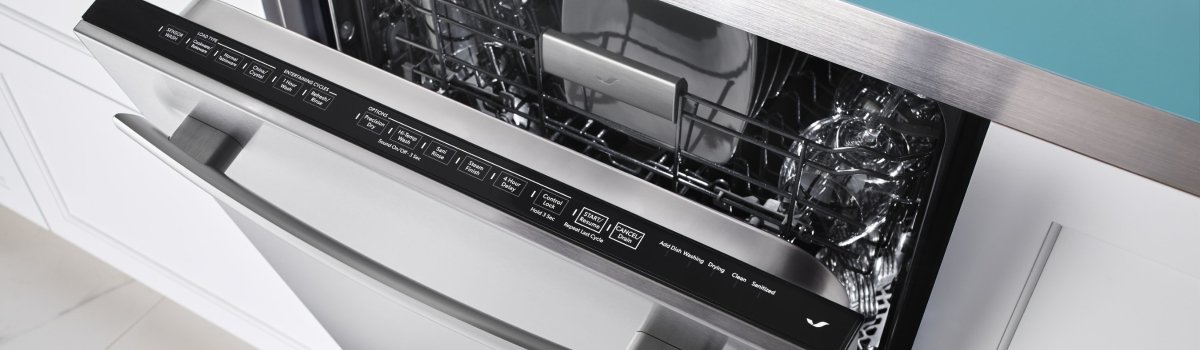
When your Jenn-Air dishwasher flashes Error Code FD, it’s calling out a detergent dispenser error—the cup isn’t opening on time, isn’t opening at all, or isn’t delivering detergent the way the control expects. Because detergent activation is tied to spray timing, water temperature, and the dispenser’s door mechanism, even a small hiccup can leave dishes cloudy or greasy and trigger FD.
What this fault actually is
FD points to a problem with the dispenser assembly or the signals that command it. The control board sends power to a wax motor/solenoid inside the dispenser; that actuator pops the door at a specific moment in the wash. If the door is blocked, gummed up with old detergent, or the actuator doesn’t move freely (or isn’t powered), the control “sees” that detergent wasn’t released and records the fault. Sometimes it’s mechanical (sticky hinge, tired spring). Other times it’s electrical (weak actuator, damaged wiring, or a control output issue). Incorrect loading can even be the whole story—tall items on the upper rack can block the door.
Symptoms you might notice
You’ll typically see one or more of these:
- FD shows at the end of a cycle or mid-cycle pause
- The dispenser door is still latched shut after the wash
- Clumped powder or a half-melted pod sits in the cup
- Dishes feel slippery or appear hazy from under-dosed detergent
Quick checks before tools come out
Start simple and smart.
- Power-cycle the machine at the breaker for 5 minutes, then re-run a Normal/Auto cycle with no dishes to test.
- Open the door and manually flip the dispenser door—it should spring open crisply and re-latch smoothly.
- Look for rack items blocking the door (tall utensils, cutting boards, pan handles) and for an upper spray arm that might strike the door when it opens.
- Confirm detergent is fresh and dry (powder older than ~6 months or pods stored in humidity can cake and stall the door).
- Run the hot tap at the sink for 20–30 seconds first; dishwashers expect ~120°F (49°C) inlet water to dissolve detergent on cue.
DIY fixes you can do safely
Keep it simple, keep it safe—no live-power work.
Clean and de-gunk the cup. Remove visible residue with warm water and a soft brush. Pay attention to the hinge area and perimeter seal; old detergent can act like glue.
Check the latch and spring. If the door opens weakly, a tired spring can slow the flip. Many dispenser doors allow the spring to be reseated without removing the whole assembly—work gently.
Rethink loading patterns. Keep tall items away from the dispenser zone on the upper rack. Make sure the silverware basket or a baking sheet isn’t “roofing” over the door.
Try a different detergent format. If pods are sticking, test a quality powder or gel for a cycle. If powder clumps, switch to individually wrapped pods stored in an airtight container.
Rinse-aid calibration. Overfilled or leaking rinse-aid can make the door sticky. Wipe spills, then set the dispenser to a mid-range dose and adjust later.
If FD clears after these, great—do a couple of normal loads to be sure. If it returns, move to deeper checks.
When to call a pro
If the code returns right after a reset, or you find a weak actuator, brittle wires in the door hinge area, or a dispenser door that binds even when clean, bring in a technician. A proper diagnosis includes:
- Metering the actuator’s resistance and verifying it gets the right voltage on command
- Inspecting door-hinge wiring for breaks (a common flex point)
- Checking control outputs and timing events in service mode
- Replacing the dispenser assembly with the correct, model-specific part when needed
Running the dishwasher repeatedly with a failing dispenser can waste cycles, leave residue on glassware, and in some cases trip other heater or turbidity faults—fix it at the root.
Preventive habits that keep FD away
A few small habits pay off.
- Store detergent airtight. Humidity wrecks powder and softens pods; use a sealed container.
- Mind the heat. Aim for ~120°F hot water at the kitchen sink; low inlet temps delay dissolving and door timing.
- Load with clearance. Leave a “view” to the dispenser—no tall utensils or boards over the cup area.
- Monthly freshen-up. Run a hot cycle with a dishwasher cleaner to strip grease/film that can gum up hinges and spray arms.
- Filter and spray arm care. Keep the coarse filter clear and ensure spray arm holes aren’t packed with seeds or scale; strong spray helps pull detergent out fast.
- Right cycle, right dose. Heavier soil needs a full-strength cycle; eco cycles plus half-doses often under-deliver, encouraging residue in the cup.
Short action plan (bookmark this)
- Reset power → test empty cycle
- Clean the dispenser and hinge → verify snappy door action
- Adjust loading and try fresh detergent
- If FD returns: inspect gasket, check spray arms/filters
- Still failing? Schedule a technician to test the actuator, harness, and control timing
Want this tuned to your exact Jenn-Air model—with the correct dispenser part number and service-mode steps? Share the model and serial, and I’ll tailor the guide so you can fix it once and be done.