
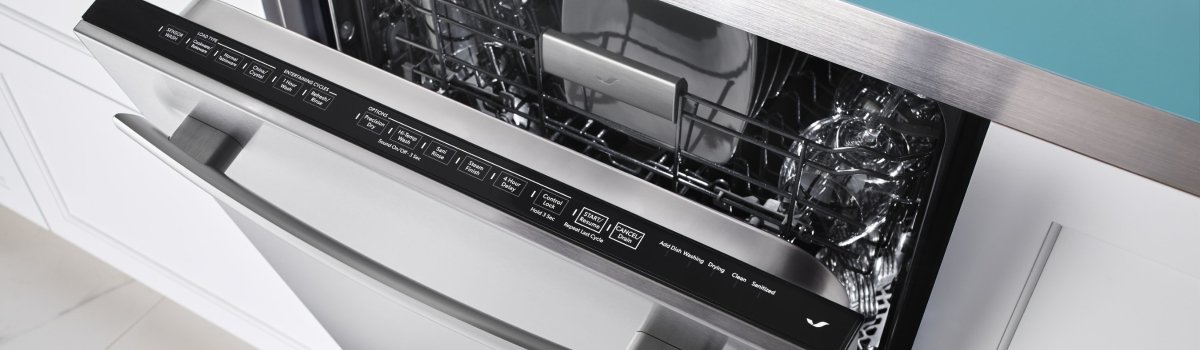
When a Jenn-Air dishwasher flashes Error Code F6, it’s usually the machine’s way of saying, “I don’t think the door is safely closed.” Modern dishwashers won’t run unless the control sees a solid latch signal. If that signal drops—because the latch is misaligned, the strike is loose, the switch is worn, or the door is flexing under cabinet pressure—the control throws F6 and stops the cycle to protect you and the appliance.
What this fault actually means
The door latch does two jobs: it mechanically locks the door and it tells the control board that the door is secure. F6 appears when the control doesn’t get that “door closed” confirmation during start, or it loses it mid-cycle due to vibration or a weak switch. Sometimes you’ll notice subtle clues before the code: the cycle starts only if you push on the door, the machine pauses when a heavy spray hits the door, or the handle feels different than usual.
Common causes (in plain English)
- Normal wear on the microswitch inside the latch
- A slightly misaligned strike plate after a hard close or cabinet settling
- Door gasket bulge or debris that keeps the door from seating tight
- Racking pressure (an overpacked top rack or tall items pressing the door)
- Cabinet interference—the dishwasher isn’t quite level or is pulled too tight to the counter, flexing the door
- A damaged latch assembly (cracked housing, bent tab, broken spring)
Quick checks before you grab tools
Start simple. Power the unit off for a minute, open and close the door with a firm, even push, then try a rinse cycle. If the code clears, great. If F6 returns, move to inspection. Look along the top and sides of the door for anything that could block a tight seal—folded gasket corners, stuck food bits, utensils, or tall cutting boards leaning forward.
DIY steps: how to clear F6 safely
Unplug the dishwasher or switch it off at the breaker before any hands-on work.
- Inspect and reseat the gasket
Wipe the door gasket with warm, soapy water. Make sure it isn’t twisted or pulled out of its channel. A clean, soft gasket helps the latch seat fully. - Check rack loading
Slide both racks in and confirm nothing protrudes. Remove any tall items that may press against the door panel. Try a short cycle again. - Check strike alignment
Open the door and look at the metal strike on the tub frame. It should be centered in the latch opening on the door. If it’s off to one side, slightly loosen its screws, nudge it so the door closes clean and even, then retighten. - Tighten the mounting
With the door open, inspect the brackets that secure the dishwasher to the countertop or cabinet. If the unit has shifted or is racked, the door can flex and lose contact with the latch switch. Re-level the machine (front feet) so the door gap is even. - Examine the latch
The latch sits behind the door handle area. If the handle feels sloppy or you see cracks in the latch housing, the assembly may be worn. Gently close the door and listen—do you get a crisp “click”? A dull or inconsistent click hints at a weak switch. - Final test
Restore power, select a light cycle, close the door firmly, and watch the first two minutes. If F6 doesn’t return and the wash begins, you likely solved a seating or alignment issue.
If the code reappears—or you must press on the door to keep it running—the latch assembly or switch is probably due for replacement.
When to call a pro
If you find cracked plastic around the latch, heat-browned switch terminals, or the strike won’t stay aligned, don’t push it. A technician can test the latch switch electrically, verify door geometry, and replace the latch/strike with the correct part for your Jenn-Air model. They’ll also check for cabinet racking that might bring the problem back.
Practical fixes you can do (without over-repairing)
- Clean and condition the gasket (mild soap only).
- Re-level the dishwasher and snug the mounting brackets.
- Recenter and tighten the door strike.
- Replace missing bumpers or spacers that cushion the door close.
If you’re comfortable with basic parts work, a latch assembly swap is straightforward on many models—just match the part to your full model number, transfer any springs carefully, and avoid over-tightening screws in plastic.
How to avoid F6 in the future
Keep it simple and consistent. Close the door with a firm, single push—no slamming. Don’t lean heavy pans against the inner door while loading. Wipe the gasket weekly so oils and food residue don’t create “high spots.” After any installation or countertop work, re-check level and bracket tension so the door frame isn’t twisted. And if your kitchen is busy and the dishwasher runs daily, a quick latch inspection during seasonal deep cleans can catch wear before it becomes Error Code F6.
Quick recap you can follow anytime
- F6 = the control doesn’t believe the door is securely latched.
- Start with power reset, gasket clean, rack check, strike realign, then re-level if needed.
- If it only runs when you press on the door—or if parts look worn—replace the latch assembly or call a pro for a fast, model-correct repair.
Need this tailored to your exact model so part numbers and latch style are 100% accurate? Share your Jenn-Air model and serial, and I’ll map the exact steps and parts for your unit.