
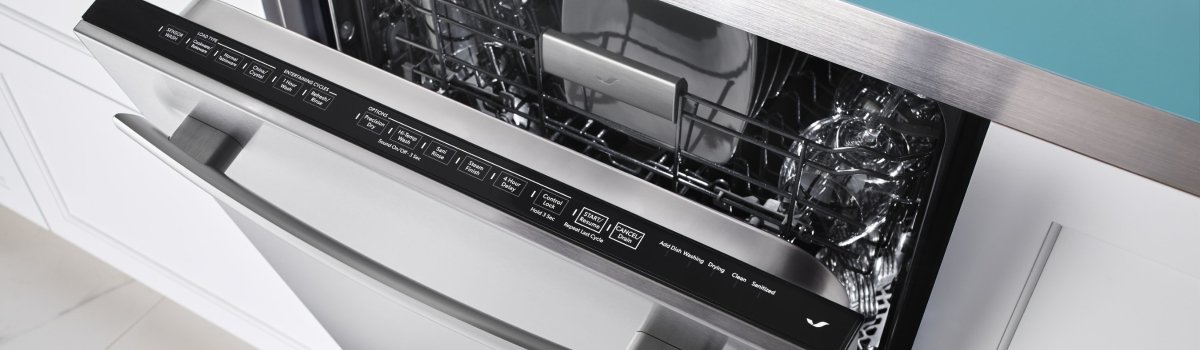
When your Jenn-Air dishwasher flashes Error Code F2, it’s pointing to a motor rotation fault—the main wash (circulation) motor isn’t spinning the way the control expects. In plain English: the motor that pressurizes water to the spray arms is stalled, jammed, weak, or not getting proper power. The result is poor or no spray, grit left on dishes, and a cycle that times out with F2.
What F2 means (in normal words)
Inside the tub, a circulation pump pushes water through the spray arms. The control board monitors whether that motor starts, draws the right current, and keeps spinning. F2 means the control “sees” abnormal rotation—typically a seized impeller, debris in the pump, a failing run capacitor, or wiring/control issues that starve the motor.
You’ll often notice one or more of these:
- A low hum with no water movement
- Spray arms not spinning, dishes still dirty
- The code appears a few minutes into the wash, not at the very start
- Sometimes a burnt-rubber or hot-electrical smell
Why this happens
Over time, food scraps, labels, glass shards, and seeds migrate past the filter into the sump and reach the pump’s impeller. Even a small fragment can lock it up. Mineral scale can make an older motor hard to start. A weak run capacitor won’t give the motor the kick it needs. Less commonly, a loose connector, nicked wire, or control fault interrupts power, causing a stall that the board flags as F2.
First, try the safe basics
Unplug the dishwasher or switch the breaker off. Wait five minutes. Restore power and run a Quick cycle. If F2 returns, don’t keep restarting; move to inspection. Working with water and electricity can be hazardous—only proceed with steps you’re comfortable with.
DIY: Clear jams and give the motor a fair shot
Work methodically. Photograph as you go so reassembly is easy.
Access the filter and sump
Open the door, remove the lower rack. Lift out the coarse filter screen and twist out the fine filter. Rinse both. Look into the sump inlet with a flashlight.
Check for debris at the impeller
Many Jenn-Air models let you remove a small cover in the sump to reach the circulation pump inlet. If reachable, feel for labels, bones, kernels, glass. Use needle-nose pliers or tweezers—never fingers—if you see sharp fragments. Rotate the impeller gently; it should spin freely with light resistance.
Spin the spray arms
Make sure upper and lower spray arms turn freely and aren’t blocked by tall items. Clogged spray-nozzle holes can also load the pump; rinse them under a sink and poke out mineral with a wooden toothpick (don’t enlarge the holes).
Confirm water level
Start a quick cycle and let it fill. Open the door mid-fill (carefully). Water should cover the sump intake by roughly ¼–½ inch. If low, check the inlet screen at the water valve and your home shutoff. Low fill stresses the pump and can trigger F2.
Listen for the motor
Close the door and resume. If you hear only a hum and no spray, the motor may be bound or the run capacitor weak. If you previously cleared debris and it still only hums, stop the cycle.
Inspect the wiring you can see
Power off again. Remove the toe-kick panel. Look for loose harness plugs, heat-discolored connectors at the pump, or a pinched wire by the cabinet. Reseat any loose connector firmly.
Reset and retest
Restore power and try a Rinse or Quick cycle. If spray returns and the code disappears, you likely cleared the jam. If F2 reappears, the circulation pump assembly (motor+impeller, and sometimes capacitor) is probably failing and should be replaced.
If you’re not 100% comfortable working around sharp debris or live circuits, stop after the filter/sump inspection and let a pro handle the motor and capacitor testing.
When to call a technician
Call in a specialist if F2 returns after a clean reset, the motor only hums, you find melted plastic/heat damage near the pump, water level is fine but there’s still no spray, or wiring/connectors look suspect. A pro will meter the motor windings, test the capacitor, verify voltage under load, check the control output, and replace the circulation pump assembly if needed—using the correct part for your exact model.
Keep F2 away: simple prevention that works
- Rinse the filter weekly. It takes 60 seconds and keeps debris out of the pump.
- Scrape, don’t prewash. Remove bones, pits, and seeds; let the dishwasher handle the rest.
- Watch labels and foil. Container labels and loose foil migrate to the sump and jam the impeller.
- Mind hard water. If you have heavy scale, use rinse aid and run a monthly dishwasher cleaner to reduce mineral buildup that stiffens the motor start.
- Load for airflow. Don’t block the lower spray path with pans; a starved pump works harder and runs hotter.
Quick reference (save this)
If you see F2: power-reset → clean filters → check sump for debris and free-spin the impeller → verify water level → reseat visible connectors → retest on Quick. If humming or F2 persists, book service for a circulation pump/capacitor check and likely replacement.